 how-to
7 Signs of Outdated Electrical Wiring in Your Home
Last Updated: October 25, 2026
Quick Summary
Outdated electrical wiring shows itself through flickering lights, frequently tripping breakers, buzzing or crackling sounds from outlets and switches, burning smells, and warm or discolored outlets. These signs indicate your home's aging wiring cannot safely handle today's electrical demands and poses fire and shock hazards.
- Flickering lights when major appliances start signal undersized wiring or loose connections struggling to deliver steady power.
- Frequent circuit breaker trips multiple times per week indicate a dangerously overloaded system that needs professional evaluation.
- Buzzing, crackling, or humming from outlets and the panel means electricity is arcing across loose connections and creating fire risk.
- Warm outlets and discolored outlet plates prove heat is building up inside the wall from corroded or loose connections.
- Knob-and-tube wiring from the 1880s-1940s and aluminum branch-circuit wiring from the 1960s-1970s are particularly prone to deterioration and overheating.
Table of Contents
- Why Outdated Electrical Wiring Matters for Your Safety
- Flickering and Dimming Lights
- Frequent Circuit Breaker Trips and Blown Fuses
- Buzzing, Crackling, and Other Unusual Electrical Sounds
- Burning Smells and Signs of Overheating
- Warm, Hot, or Discolored Outlets and Switches
- Identifying Signs of Faulty Electrical Wiring and Knob-and-Tube Wiring Signs
- Conducting an Electrical Inspection for Old Homes
- Frequently Asked Questions
Why Outdated Electrical Wiring Matters for Your Safety
Outdated electrical wiring is one of the most serious hazards in older homes, a fire hazard, a shock hazard, and a threat to your appliances. We help homeowners spot problems before they become dangerous.
Today's homes draw far more electricity than homes built 30-50 years ago. Smart devices, air conditioning, EV chargers, and high-powered appliances strain aging wiring, causing flickering lights, tripping breakers, and worse.
Flickering and Dimming Lights
Flickering or dimming lights are one of the most common signs of outdated electrical wiring.
Your system is struggling: wiring may be undersized, connections loose, or deteriorating inside your walls.
Pay attention to the pattern:
- Lights dim when you use the microwave or air conditioner
- Lights flicker randomly throughout the day
- Dimming happens in one room or the entire house
The National Electrical Code guidelines establish standards for residential wiring capacity.
You can explore more detailed solutions by learning how to fix flickering lights safely and understanding what causes the problem in your specific situation.
Frequent Circuit Breaker Trips and Blown Fuses
Circuit breakers trip to protect your home from overload and fire. But if they trip constantly, your wiring is telling you something important.
Multiple trips per week signal a dangerously overloaded system.
Common patterns that signal outdated wiring:
- Breakers trip when you run multiple appliances
- The same breaker trips repeatedly
- Breakers trip during normal household use, not just peak times
If your home still has fuses instead of a modern breaker panel, your wiring is definitely outdated, fuses signal 1950s or earlier systems not built for modern loads.
Learn more about what's causing these trips and how to address them by reading troubleshooting tripping circuit breakers.
When trips become frequent, consider a panel upgrade, an undersized or aging panel can't distribute power safely.
Buzzing, Crackling, and Other Unusual Electrical Sounds
Your electrical system should be silent. Buzzing, crackling, or humming from outlets, switches, or the panel means something is wrong.
These sounds mean electricity is arcing across loose connections. Arcing creates heat, and heat near wood framing or insulation can start fires.
Listen for these warning signs:
- Buzzing from outlets or switches
- Crackling sounds from the electrical panel
- Humming that gets louder when you use appliances
Don't ignore them, they indicate loose wires, corroded connections, or failing equipment inside your walls. Call a professional immediately.
Burning Smells and Signs of Overheating
A burning smell near an outlet or panel is an emergency. Stop using that circuit immediately.
Burning smells mean wiring or equipment is overheating, from corroded wiring, arcing connections, breaking-down insulation, or failing equipment.
If you smell burning plastic or rubber near electrical fixtures, turn off the breaker and call for help.
Overheating is how electrical fires start, and outdated wiring with deteriorated insulation is especially prone to it under load.
Take these steps immediately:
- Identify which circuit smells like burning
- Turn off its breaker
- Do not use that circuit until inspected
Warm, Hot, or Discolored Outlets and Switches
Outlets and switches should be cool to the touch. A warm plate is abnormal.
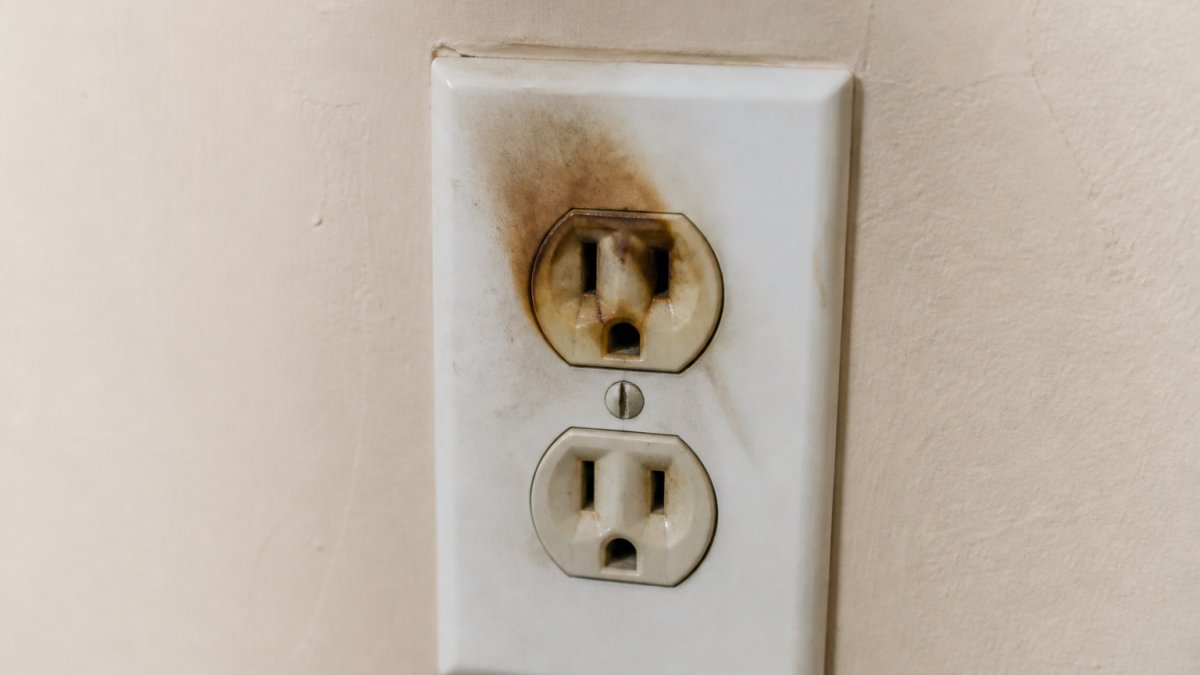
Warm outlets mean current is flowing through a resistance point, usually a loose connection inside the outlet or behind the wall.
Look for these danger signs:
- Outlets that are warm to the touch
- Discolored or scorched outlet plates
- Burn marks around the outlet or switch
Discoloration and scorch marks prove heat has been building up, the plastic housing is melting or burning and the wiring inside is overheating.
Outdated electrical wiring often has connections that loosen over time, and older outlets may have corroded terminals.
If you find a warm or discolored outlet:
- Stop using it immediately
- Turn off its breaker
- Have it inspected by a professional
Identifying Signs of Faulty Electrical Wiring and Knob-and-Tube Wiring Signs
Not all outdated wiring looks the same, and the type in your walls changes both the risk level and the right course of action.
A critical caveat: visual identification has real limits. Wiring is hidden inside walls, junction boxes, and conduit, and previous owners may have spliced new wiring into old runs. Never open a panel, remove an outlet cover, or probe inside a wall yourself.
Knob-and-tube wiring
Knob-and-tube was the standard residential wiring method from roughly the 1880s through the 1940s. It is still present in some older homes, often hidden under attic insulation or behind plaster.
What it looks like from a safe distance:
- Individual conductors run separately, not bundled together inside a single cable sheath
- Wires supported by white ceramic knobs nailed to framing, and passing through ceramic tubes where they cross wood
- Cloth or rubber-and-cloth insulation that may look brittle, cracked, or flaking
Why it matters: the insulation deteriorates with age and heat, the system has no ground path, and it was designed for far lower loads than a modern home draws. Knob-and-tube buried under blown-in attic insulation is a particular hazard, the insulation traps heat the wiring was designed to shed into open air.
Aluminum branch-circuit wiring
Aluminum wiring was widely installed in homes built roughly between the mid-1960s and the late 1970s, when copper prices spiked. It is most often found on 15- and 20-amp branch circuits feeding outlets and switches.
What to look for:
- Silver-colored metal conductors rather than copper-colored ones, visible only where wiring is exposed at a fixture or in an unfinished space
- Wiring markings on the cable jacket that include "AL" or "aluminum"
- Outlets and switches that feel warm, or that have discolored plates, aluminum connections are more prone to loosening and overheating
Why it matters: aluminum expands and contracts more than copper under heat cycling, so connections work loose, and its oxide layer adds resistance at every connection, producing heat at outlets, switches, and splices.
Cloth-insulated and other early wiring
Cloth-wrapped wiring predates plastic-insulated cable. The insulation is fabric over rubber, and both layers degrade: the rubber hardens and cracks, and the cloth frays and falls away, exposing bare conductor. You may see it in very old homes, sometimes spliced into newer runs.
Other red flags that suggest legacy wiring, regardless of type:
- A fuse box rather than a circuit breaker panel
- Only two prongs on the outlets throughout the house (no ground slot)
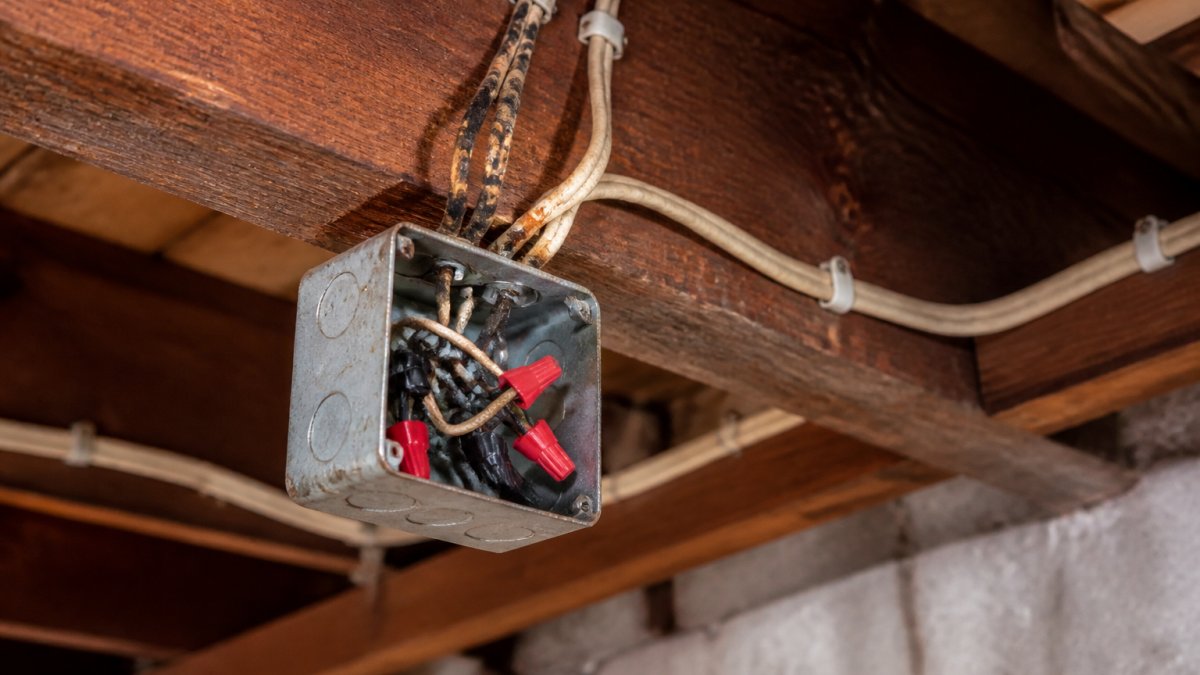
- A tangle of spliced, taped, or unlabeled wiring in the basement or attic
What this means for you
The wiring type tells you how urgent the situation is. Knob-and-tube and deteriorating cloth insulation generally point toward rewiring; aluminum branch circuits point toward a professional evaluation of every connection; mixed systems require an electrician to trace what is connected to what. You cannot reliably identify your home's wiring from the outside, but gathering the clues above and handing them to a professional shortens the inspection and focuses it on the highest-risk areas first.
Different types of outdated wiring present different hazards and require different solutions.
| Wiring Type | Era Installed | Key Identifying Features | Primary Risk |
|---|---|---|---|
| Knob-and-tube | 1880s through 1940s | Individual conductors on ceramic knobs and tubes, cloth or rubber insulation | Insulation deteriorates, no ground path, buried under attic insulation traps heat |
| Aluminum branch-circuit | Mid-1960s to late 1970s | Silver-colored conductors, marked with AL or aluminum | Connections loosen and overheat due to expansion and contraction |
| Cloth-insulated | Pre-1950s | Fabric over rubber insulation, frayed or cracked | Rubber hardens and cracks, cloth frays, exposing bare conductor |
| Fuse box systems | 1950s or earlier | Fuses instead of circuit breaker panel | Not built for modern electrical loads |
Conducting an Electrical Inspection for Old Homes
If your home is older, a professional electrical inspection is one of the smartest investments you can make. Here's what you can safely check yourself, what requires a licensed electrician, and what a real inspection involves.
The safe homeowner checklist (no tools, no disassembly)
These are non-invasive observations you can make without opening anything or touching suspect equipment. If any answer is yes, note it and schedule a professional inspection.
- Do lights flicker or dim when large appliances start?
- Do breakers trip repeatedly, or does the same breaker trip again and again?
- Do any outlet or switch plates feel warm to the touch?
What you should not do: open the electrical panel, remove outlet or switch covers, probe inside walls, or attempt to test wiring yourself. Those tasks require training, proper tools, and de-energizing circuits safely.
What a professional inspection actually covers
A thorough inspection is more than a visual walk-through. Depending on the home, an electrician will typically:
- Assess the service and panel. Confirm the service size and panel rating, check for overheating, corrosion, double-tapped breakers, and improper breaker sizing, and verify the panel is properly bonded and grounded.
- Trace and identify wiring types. Determine what wiring is present in accessible areas and identify mixed or spliced systems.
- Test outlets and switches. Check polarity, grounding, and GFCI protection where required, and look for evidence of heat damage at terminations.
How wiring condition is assessed
An electrician combines several methods: visual inspection of accessible wiring, thermal scanning of panels and terminations to find hot spots under load, voltage-drop and continuity testing at outlets, and sometimes pulling a representative device to inspect the connections behind it. The goal is to distinguish between wiring that is old but sound and wiring that is degraded or unsafe. Age alone does not settle the question, a well-maintained 1950s system with modern upgrades may be in better shape than a 1980s system with a history of amateur additions.
What happens after a problem is found
A good inspection ends with a written summary organized by priority:
- Immediate hazards, conditions that should be addressed before the circuit is used again (overheating terminations, arcing, damaged insulation at a connection).
- Prompt repairs, issues that should be scheduled soon, such as an undersized panel, missing GFCI protection in required locations, or aluminum wiring connections that need evaluation.
- Monitor and plan, items that are not urgent but should factor into a longer-term upgrade plan.
From there, the conversation turns to repair versus rewiring. You can book electrical repair service to address identified issues safely and professionally.
The Electrical Safety Foundation International recommends that homes with outdated wiring be inspected by a licensed electrician, and many insurers now ask for an inspection on older homes before issuing or renewing coverage. The National Fire Protection Association notes that electrical hazards are among the leading causes of home fires and are largely preventable with proper maintenance and timely upgrades.
One more point worth stating plainly: a home's age is not the same as its wiring's age. Renovations, panel replacements, and partial rewiring may have updated part or all of the system.
You can also read more about prioritizing electrical panel upgrades if a full rewiring isn't feasible right away.
Frequently Asked Questions
What are the most common signs of outdated electrical wiring?
The most common signs of outdated electrical wiring include flickering or dimming lights, frequent circuit breaker trips, buzzing or crackling sounds from outlets, burning smells, and warm or discolored outlets and switches. Older homes with knob-and-tube wiring or cloth-wrapped wiring are especially at risk. If you notice any combination of these warning signs, have a professional inspect your electrical system to assess whether repair or rewiring is needed.
Is knob-and-tube wiring dangerous?
Yes, knob-and-tube wiring is considered a significant fire hazard. This outdated wiring type, common in homes built before 1950, lacks grounding and insulation by modern standards. It cannot safely handle today's electrical loads from modern appliances and devices. If you have knob-and-tube wiring signs such as visible ceramic knobs and tubes in your attic or walls, a professional electrical inspection is essential.
When should I have my home's wiring inspected?
You should schedule an electrical inspection for old homes if your house was built before 1980, if you notice any warning signs like flickering lights or burning smells, before major renovations, or if you're planning to add high-demand systems like EV chargers or smart home automation. A professional inspection identifies whether repairs will address your needs or if whole-home rewiring is necessary. A consultation helps clarify what actually needs to be done versus what can wait.
Can I check old electrical wiring myself?
You can perform a basic visual inspection of accessible areas like your attic or basement to look for signs of faulty electrical wiring, such as cloth-wrapped wires, visible corrosion, or burn marks. However, a professional electrical inspection is essential for a complete assessment. Electricians have the tools and expertise to identify hidden hazards, test load capacity, and determine whether repair or full rewiring is needed. Never attempt to repair or modify wiring yourself, as this creates serious fire and shock hazards.