 how-to
Book Electrical Repair Service: A Complete Guide
Table of Contents
- How to Book Electrical Repair Service
- Understanding Electrical Repair Cost
- Emergency Electrician: When You Need Immediate Help
- What to Expect During Your Electrician Service Call
- Electrical Troubleshooting Before You Call
- How to Verify and Compare Electricians
- Preparing Your Home for the Electrician
- Questions to Ask Before Approving Electrical Work
- Frequently Asked Questions
Last Updated: October 21, 2026
How to Book Electrical Repair Service
Booking electrical repair service doesn't have to be complicated. Whether you need a quick fix for a flickering outlet or a full system inspection, scheduling efficiently saves time and frustration.
Your first decision is whether to book online or call. Both work, but each has distinct advantages.
Online Booking vs. Phone Scheduling
Online booking platforms let you pick your preferred date and time without waiting on hold, with immediate confirmation.
Phone scheduling connects you with a real person who can answer questions, which matters when you're unsure whether you need standard or emergency service. It also works better for same-day appointments when online slots may not reflect real-time availability.
Many homeowners check online availability first, then call to discuss details or book urgently. Both options are straightforward.
Information You'll Need Ready
Before you contact any electrician, gather specific details to speed up booking and help the technician prepare.
Have your address ready, including gate codes or parking instructions. Note the specific problem: flickering lights, dead outlets, a tripping breaker, or burning smells. Describe when it started and whether it's constant or intermittent.
If you know your panel's age or amperage (often marked on the door), mention it, along with recent changes like new appliances, renovations, or weather events.
Confirm the best phone number to reach you. If scheduling for someone else's home, make sure you have authority to grant access.
Understanding Electrical Repair Cost
Electrical repair costs vary widely with the problem's complexity. Understanding pricing factors helps you anticipate expenses and recognize fair estimates.
Your final cost depends on three components: the service call fee (if applicable), diagnostic and repair time, and parts or materials. Some electricians charge flat rates for common repairs like outlet replacement; others charge hourly labor plus parts. Emergency or after-hours service costs more.
What Affects Your Final Price
The nature of the problem is the biggest cost driver. A simple outlet replacement takes 30 minutes and costs far less than rewiring a room or upgrading a panel. Diagnostic work often takes longer than the repair itself.
Your home's age and wiring type matter. Older homes with outdated wiring require more careful work and sometimes code upgrades, adding time and materials; newer homes are faster and cheaper to repair.
Accessibility affects cost too. An easy-to-reach panel speeds the work; one buried in a closet or a problem hidden behind walls takes longer to diagnose, and troubleshooting time directly impacts your bill.
Emergency timing carries a premium. A repair during business hours costs less than the same repair at midnight or on a Sunday.
Getting an Accurate Estimate
Request a detailed estimate before work begins. A good one breaks down labor, parts, and service call fees separately, and specifies what's included versus what might cost extra.
Ask whether the estimate is binding or if costs might increase if the problem is worse than assessed. Most electricians can't know the full scope until they inspect your system, so clarifying upfront prevents surprises.
Compare estimates from multiple electricians, but don't choose solely on price. A significantly lower estimate might mean corners are cut on quality or safety; a reasonable estimate from a licensed, insured professional beats the cheapest option.
Emergency Electrician: When You Need Immediate Help
An emergency electrician provides urgent service when electrical problems pose safety risks or affect essential systems.
Call an emergency electrician immediately if you smell burning near outlets or the panel, see sparks, notice scorch marks, or experience repeated breaker trips that don't resolve on reset.
Power loss affecting your entire home or a large section warrants emergency service, especially with medical equipment, elderly residents, or young children.
Many electricians offer 24/7 availability for genuine emergencies. Emergency service costs more because technicians respond outside standard schedules, but it's worth avoiding fire, injury, or property damage.
If you're unsure whether your situation qualifies as an emergency, call and describe the problem. A professional can advise whether you need immediate service or can safely wait.
What to Expect During Your Electrician Service Call
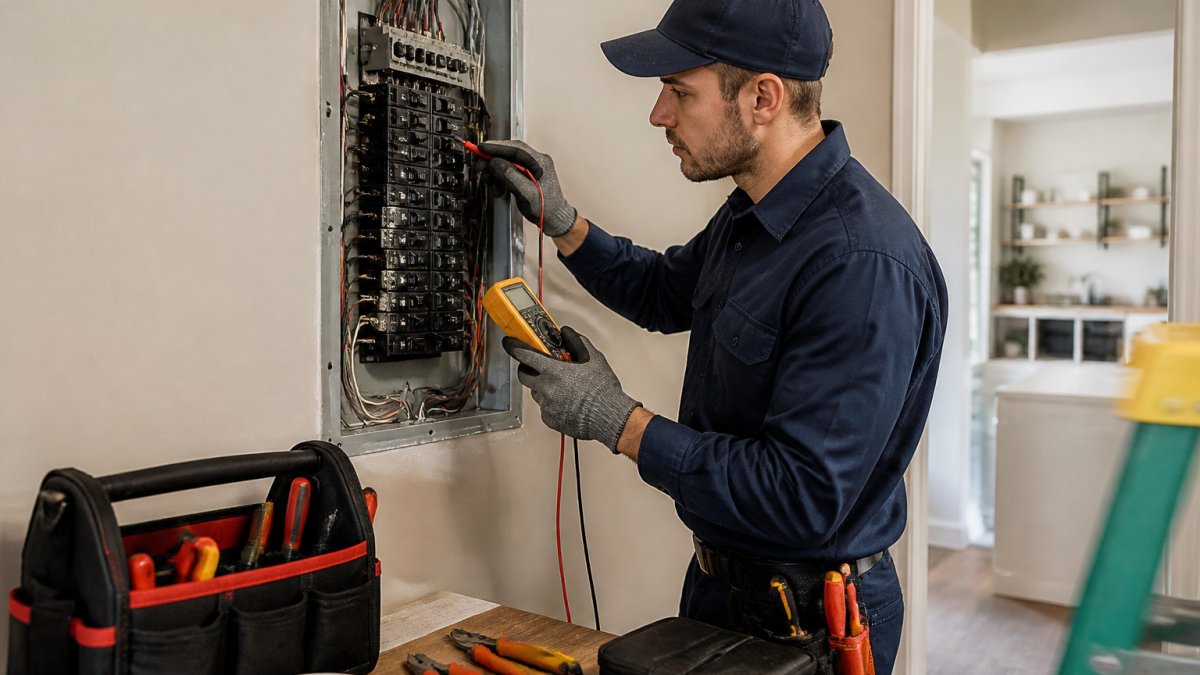
A typical electrician service call follows a predictable pattern. Understanding the visit reduces anxiety and helps you prepare.
The technician arrives during your scheduled window and asks you to describe the problem: when it started, what you've noticed, and whether anything triggered it. This conversation often reveals important clues before they inspect the affected area and your electrical system.
The Inspection and Diagnosis Process
The electrician uses diagnostic tools like multimeters and voltage testers to measure electrical flow, checking outlets, switches, the breaker panel, and wiring. This phase is crucial because the actual problem often differs from what you suspected.
A flickering light might stem from a loose connection, a failing bulb, a dimmer switch issue, or a larger wiring problem. The technician tests each possibility systematically, checking outlets, breaker positions, and connections, methodical work that takes time but ensures accurate diagnosis.
Once they've identified the problem, they'll explain what they found and what repair options exist. A good electrician explains the issue in plain language, not technical jargon. They'll tell you what needs to happen, why, and what it costs.
Timeline and Availability
Simple repairs like outlet replacement or switch installation take 30 minutes to an hour. Diagnostic work for intermittent problems might take longer, and complex work like rewiring sections or upgrading panels takes multiple hours or even days.
Ask about the technician's timeline before work begins. They should give you a realistic estimate of how long the repair will take. If they discover additional problems during the work, they'll notify you before proceeding, explaining the extra cost.
Availability depends on season and local demand. Spring and summer see higher demand, so book further in advance during busy periods. Emergency service is available 24/7, but standard appointments might have a week or more wait during peak seasons.
Electrical Troubleshooting Before You Call
Some electrical problems resolve without calling a professional. Attempting basic troubleshooting first can save you a service call fee and get your system working faster.
Start with the simplest solutions. If an outlet isn't working, plug a lamp into a different outlet to confirm it's dead, then check whether its breaker has tripped.
For flickering lights, replace the bulb first, a failing bulb causes flickering that disappears once swapped.
If multiple outlets in one area are dead, the issue might be a tripped GFCI outlet (ground fault circuit interrupter), which has a reset button and protects bathrooms and kitchens.
Loose connections cause many problems. If you're comfortable, check whether outlets are firmly seated in their boxes and visible wires are properly connected.
If nothing obvious resolves the problem after these basic checks, call a professional.
How to Verify and Compare Electricians
Choosing the right electrician matters. A poor choice means substandard work, safety issues, or inflated costs. Verification and comparison prevent these problems.
Licensing and Insurance Requirements
Every electrician working on your home must be licensed and insured. Requirements vary by state, but in most places electricians must pass exams demonstrating knowledge of electrical codes and safety, so a license confirms minimum competency.
Ask for the electrician's license number and verify it through your state's licensing board or contractor licensing agency. This takes minutes online and confirms the license is current and in good standing. Never hire an unlicensed electrician, even if they promise lower prices.
Insurance protects you if something goes wrong. A properly insured electrician carries liability insurance covering damage they cause and workers' compensation covering their employees. Request proof of insurance before work begins. A legitimate electrician provides this without hesitation.
Checking Reviews and References
Online reviews reveal how past customers experienced the service. Check Google, Yelp, and industry-specific sites for patterns: do reviews consistently mention punctuality, professionalism, and quality work, or are there complaints about pricing or incomplete repairs? One negative review means little, but multiple similar complaints signal a real issue.
Ask the electrician for references, names of recent customers who can speak to their work. Contact at least two references and ask specific questions: Was the work completed on schedule? Did the electrician explain the problem clearly? Would you hire them again? References willing to speak positively usually indicate solid work.
When you're comparing electricians, references and verifiable reviews matter more than price alone.
Preparing Your Home for the Electrician
A few simple preparations make the service call smoother and faster.
Clear access to the work areas. If the problem involves an outlet, remove furniture or decorations blocking it; if it's a panel issue, ensure the panel area is accessible.
Have your home's layout information available. If you don't know where your electrical panel is located, find it before the technician arrives. Most panels are in basements, garages, or utility closets. Knowing this saves time.
Prepare a list of any other electrical issues you've noticed. Mentioning a flickering light in one room while the electrician fixes something else might let them address both in one visit, saving a second appointment.
If you're having work done in multiple areas, confirm the technician can access all of them.
Questions to Ask Before Approving Electrical Work
Before you agree to any repair or upgrade, ask clarifying questions.
Ask what the problem is in plain language. The electrician should explain it without excessive jargon.
Confirm what the repair involves and whether it requires permits or inspections. Some electrical work triggers code requirements and inspections.
Clarify the warranty on their work. Most electricians warranty their labor for a set period, often one year. Some also warranty parts.
Ask whether the repair is permanent or temporary. Some fixes address immediate problems but suggest larger upgrades for long-term safety.
Finally, ask about payment options and whether they require a deposit. Most electricians accept multiple payment methods and some require a percentage upfront for larger jobs.
| Question | Why It Matters |
|---|---|
| What's the problem in plain language? | Ensures you understand the issue |
| What does the repair involve? | Clarifies scope and timeline |
| Are permits or inspections needed? | Affects total cost and duration |
| What's the warranty on this work? | Protects you if problems recur |
| Is this a permanent fix? | Helps you plan future upgrades |
| What payment methods do you accept? | Prevents payment complications |
When you're ready to book electrical repair service, you now have the knowledge to make informed decisions.
T6 Electrical Contractor specializes in residential and commercial electrical repairs, providing personalized consultations to match solutions with your budget and needs. Whether you need emergency service or can schedule in advance, we're here to deliver reliable solutions with expert guidance every step of the way. Learn more about electrical safety and home maintenance from the National Fire Protection Association.
Frequently Asked Questions
How do I book an electrical repair service in DFW?
Most electricians in the DFW area offer both online booking and phone scheduling. Visit the contractor's website to check for an online appointment system, or call their number directly. Have your address, a description of the electrical issue, and your preferred appointment dates ready. Many local electricians respond within 24 hours and can often schedule same-day or next-day service depending on availability and urgency.
What information should I provide when scheduling an electrician service call?
Provide your address, a clear description of the electrical problem (flickering lights, tripped breaker, dead outlet, etc.), when the issue started, and your availability. If you've noticed any safety concerns like burning smells or sparks, mention these immediately as they indicate emergency conditions. Also note whether your home is older with an outdated electrical panel, as this helps the electrician prepare for potential complications.
How much does an electrical repair service call cost?
Electrical repair pricing in the DFW area depends on the type of repair, parts needed, and labor time required. Basic service calls and minor repairs typically cost less than panel upgrades or extensive rewiring. For specific pricing, contact your chosen electrician directly for a free estimate. Many contractors offer transparent quotes before beginning work, so you know the cost upfront rather than facing surprises.
What electrical problems need immediate professional attention?
Contact an emergency electrician if you experience burning smells, sparks, exposed wires, frequent breaker trips, complete power loss to rooms, or outlets that are hot to the touch. Electrical fires and shock hazards can develop quickly, so don't delay with these symptoms. Many electricians offer 24/7 emergency service in the DFW area specifically for these urgent situations. Attempting DIY repairs on serious electrical issues creates serious safety risks.