 how-to
How to Prepare for a Local Electrical Service Consultation
Quick Summary
A local electrical service consultation is a planned conversation and inspection between a homeowner or property manager and a licensed electrical contractor to define the problem, assess the existing system, and set the scope of work. Preparing symptom notes, panel details, and photos beforehand makes the visit faster and more accurate.
- Consultations can be done by phone, at the property, or both.
- Note every symptom and when it happens, such as a breaker that trips only when the microwave runs.
- Gather your panel brand and amperage, plus photos and any past quotes or invoices.
- Never open a panel or attempt repairs yourself while waiting for the electrician.
- Ask for a written scope and estimate, and confirm licensing, insurance, and who pulls permits.
Table of Contents
- What a Local Electrical Service Consultation Covers
- How to Prepare Before the Electrician Arrives
- What Happens During an On-Site Electrical Assessment
- Questions to Ask an Electrician Before You Hire
- Electrical Evaluation Cost and Service Fees
- Comparing Written Estimates for Home Renovation Work
- Permits and Inspections for Home Renovation Electrical Work
- Booking Your Consultation With T6 Electrical Contractor
- Frequently Asked Questions
What a Local Electrical Service Consultation Covers
A local electrical service consultation is a planned conversation and inspection between a homeowner or property manager and a licensed electrical contractor. It establishes what work is needed and how it will be done. The consultation can happen by phone, at the property, or both.
Most consultations cover three things: the problem or goal, the condition of the existing system, and the scope of work. Some contractors also review permits and inspection requirements at this stage. A good consultation ends with a written estimate you can compare against other quotes.
Many homeowners assume a consultation is only for large projects. In practice, even a flickering light or a tripping breaker can justify one, because the cause is not always obvious.
How to Prepare Before the Electrician Arrives
Preparation makes the consultation faster and more accurate. Start by writing down every symptom you have noticed, including when it happens. A breaker that trips only when the microwave runs tells the electrician something different than one that trips at random.
Gather these items before the visit:
- The age of your home and any past electrical work you know about
- Your electrical panel brand and amperage, usually printed on the door or inside cover
- Photos of the panel, outlets, or fixtures in question
- A list of devices you want to add, such as an EV charger or smart home hardware
- Any previous quotes or repair invoices
Clear access to the electrical panel and the problem areas. A cluttered garage or a blocked panel adds time and can delay the assessment. Note your preferred contact method, since many contractors confirm arrival windows by call or text.
Watch out: do not open a panel or attempt repairs yourself while waiting. Exposed conductors can be lethal, and DIY attempts can complicate the work the electrician must do.
What Happens During an On-Site Electrical Assessment
The assessment itself is the part homeowners often want to understand, so here is the sequence a competent electrician typically follows, what each step is for, and what you should walk away with.
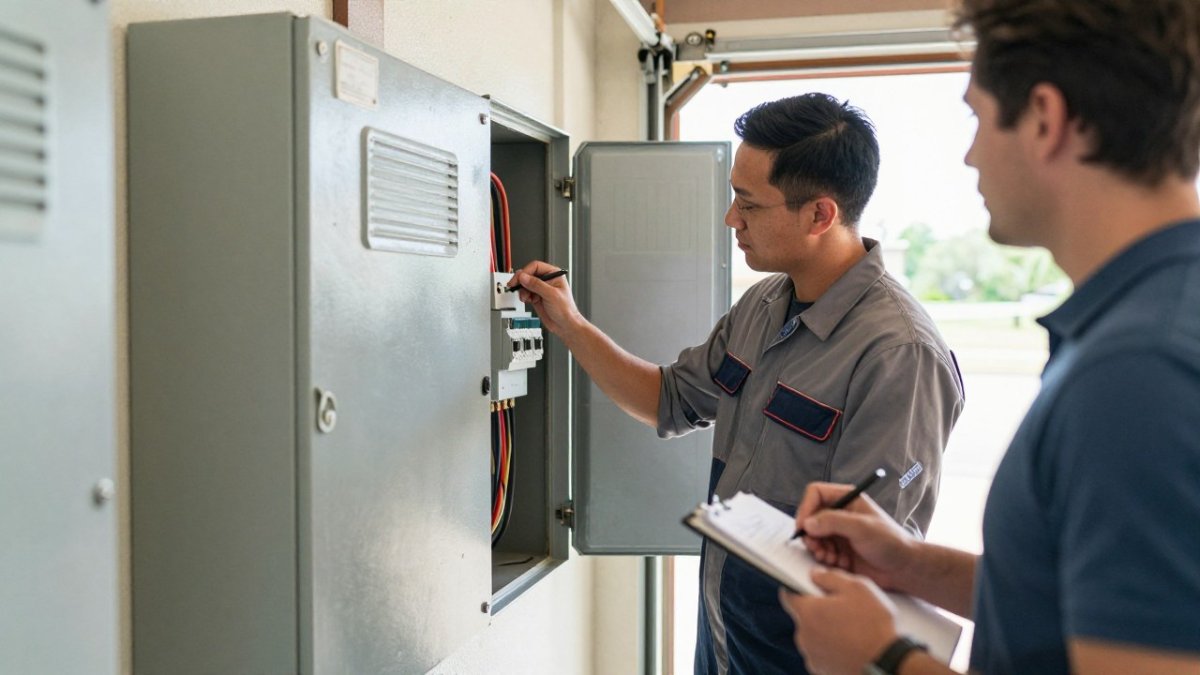
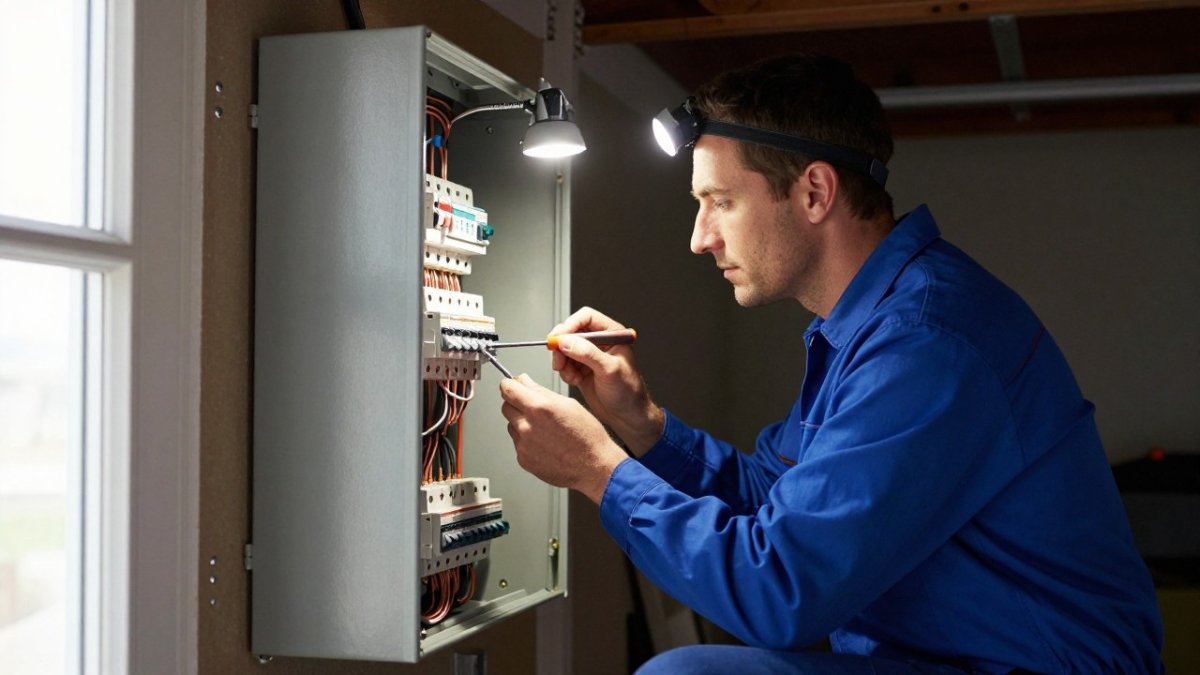
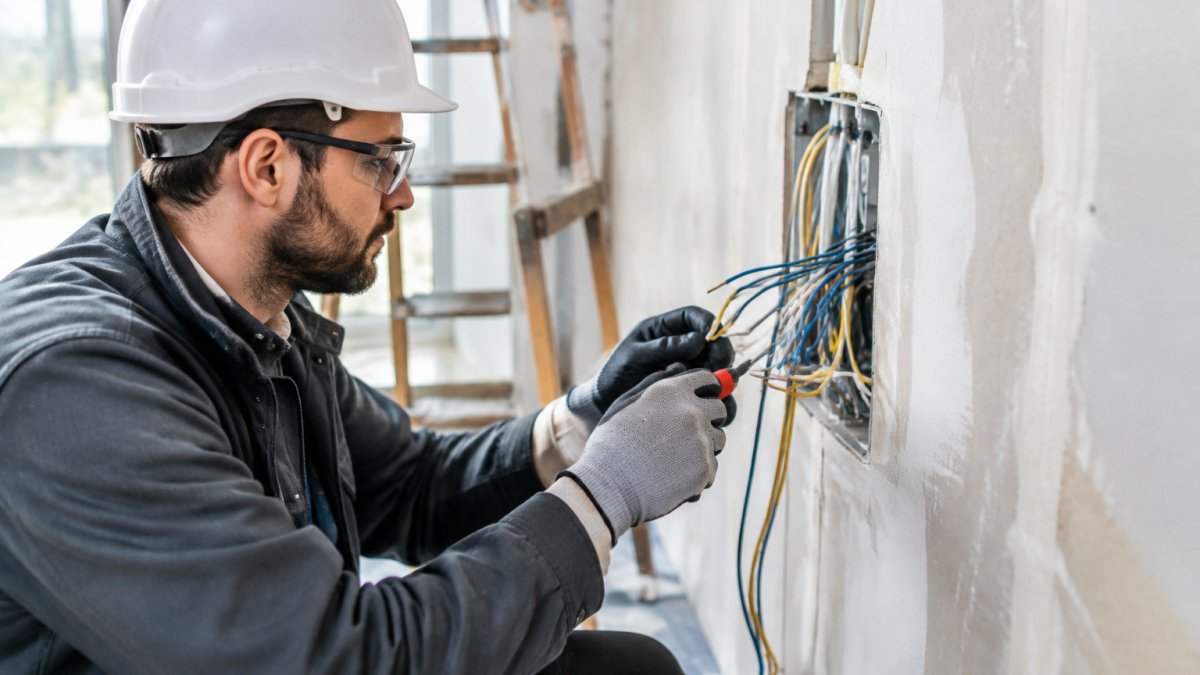
1. Intake and symptom review. The visit usually opens with a short conversation, not a screwdriver. The electrician confirms what you reported by phone, asks when each symptom appears, and asks what changed recently, a new appliance, a remodel, a storm, a breaker that was reset. This matters because a circuit that trips under load points to a different cause than one that trips at rest.
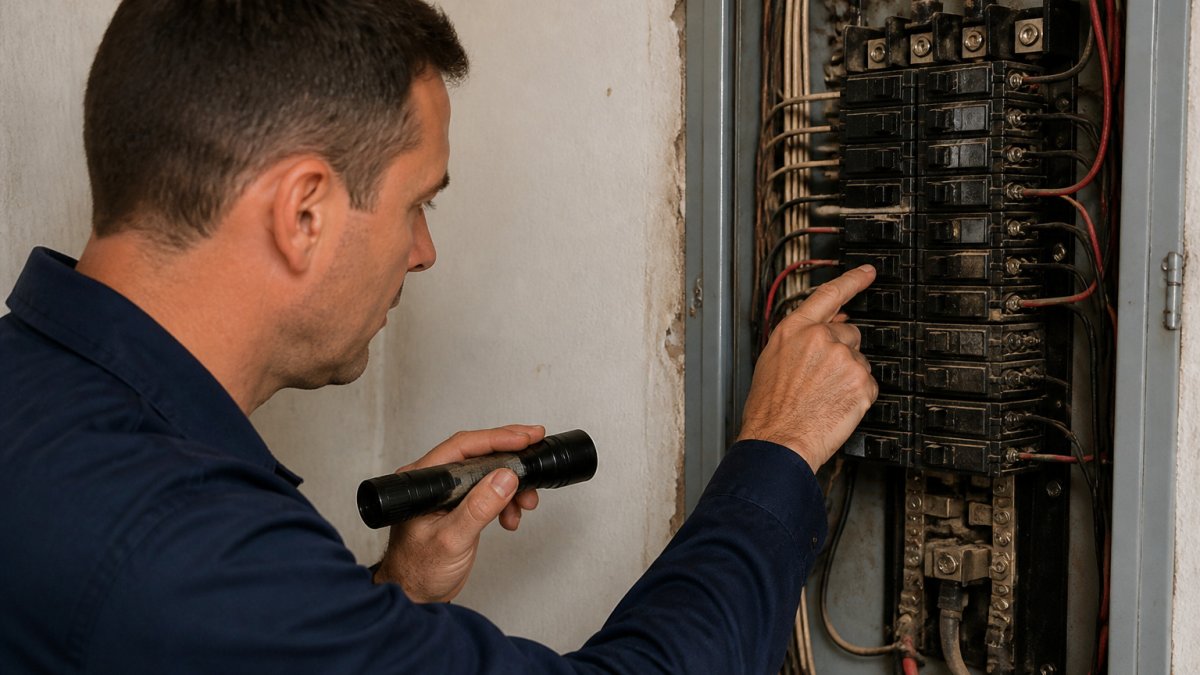
2. Panel and service inspection. The electrician removes the panel cover and checks the main breaker rating, the bus bar, breaker brands and fitment, double-tapped breakers, and evidence of heat such as discolored insulation or scorched lugs. They compare the service size against the home's load. A 100-amp service supporting an electric range, dryer, and central air is a common finding that shapes the recommendation.
3. Circuit-level testing. Expect testers and meters rather than a visual pass. A common pattern is a multimeter or circuit tester at the affected outlets, a clamp meter to read load on a circuit, and a GFCI/AFCI test at protected receptacles. For intermittent problems, the electrician may ask you to reproduce the symptom, run the microwave, turn on the dryer, while they watch the meter.
4. Wiring and grounding checks. In older homes the assessment often includes identifying conductor type. Aluminum branch wiring, cloth-insulated wire, and ungrounded two-prong receptacles each carry different remediation paths. The electrician also checks grounding and bonding at the panel and at the water and gas piping, because a panel with good breakers but poor grounding still presents a shock and surge risk.
5. Load and code review. If you are adding an EV charger, a hot tub, or a finished basement, the electrician calculates available capacity and checks whether the panel has room for the new breaker. They also note code items that affect the job, such as GFCI protection in kitchens and baths, AFCI protection on bedroom circuits, and working clearance in front of the panel.
6. Findings and written scope. The visit should end with a plain-language explanation and a written scope. Ask the electrician to show you the problem where it is visible, a scorched lug, a loose neutral, a backstabbed receptacle. You should leave knowing three things: what is wrong, what is urgent versus what can wait, and what the next step costs.
What to expect in writing. A useful assessment write-up lists the findings, the recommended repair or upgrade, the permit and inspection implications, and the estimate with inclusions and exclusions. If the electrician only gives you a verbal number, ask for it in writing before you schedule work.
Watch out: do not accept a diagnosis that skips testing. A recommendation to replace a panel based only on a visual glance, with no load reading and no circuit testing, is a reason to get a second opinion.
Questions to Ask an Electrician Before You Hire
Before committing, ask direct questions about licensing, insurance, and experience with your type of job. Confirm that the contractor holds a current state electrical license and carries general liability and workers' compensation insurance. You can verify most licenses through your state's licensing board.
Other useful questions include:
- Will you pull the required permits, and who is responsible for inspections?
- How do you price work: flat fee, hourly, or per-project estimate?
- What warranty covers the parts and labor?
- Who will perform the work, and will they be employees or subcontractors?
- How soon can you start, and what happens if the schedule slips?
Clear answers signal a professional operation. Vague responses about permits or insurance are a reason to keep looking.
Electrical Evaluation Cost and Service Fees
Electrical evaluation costs depend on the complexity of the problem and whether the visit is a standalone diagnostic or part of a larger project. Ask each contractor how their evaluation is priced and whether any fee is credited toward the repair.
Pricing structures for electrical work vary, and contractors may use different models:
| Service Type | Typical Pricing Model | What to Confirm |
|---|---|---|
| Diagnostic visit | Flat fee, sometimes credited | Whether the fee applies to repairs |
| Hourly repair | Hourly rate plus parts | Minimum charge and trip fee |
| Project estimate | Written quote per scope | What the quote includes and excludes |
| After-hours call | Premium rate | Surcharge amount and response window |
Pricing depends on quantity, dates, and delivery, so request a written quote before work begins. For current rates and a quote tailored to your property, contact T6 Electrical Contractor directly.
Comparing Written Estimates for Home Renovation Work
Renovation estimates are rarely apples to apples. Two quotes for the same basement finish can differ noticeably because one includes permit fees, drywall patching, and a panel upgrade and the other does not. The way to compare is line by line, not total to total.
Build a comparison sheet. Put each estimate in its own column and list the same categories down the side: labor, materials, permits, inspections, drywall and finish repair, disposal, and contingency. Fill in each cell from the contractor's written scope. Gaps in a column are as informative as numbers.
Check the scope matches. Confirm the same number of circuits, the same fixture count, the same panel work, and the same wire gauge. A quote that specifies 14-gauge wire for a 20-amp circuit, or that omits the dedicated circuit your EV charger needs, is not the same job at a lower price.
Read the allowances. Many estimates use allowances for fixtures, devices, or finish materials. An allowance is a placeholder, not a price. If one quote carries a smaller lighting allowance than another, the totals are not comparable until you price the fixtures you actually want.
Find the exclusions. Look for what the estimate says it does not cover: drywall repair after wiring, painting, permit fees, engineering, or disposal of old equipment. Exclusions are where low bids hide their cost. Ask each contractor to state exclusions explicitly in writing.
Compare permits and inspections. Confirm who pulls the permit, who pays the permit fee, and who schedules the rough-in and final inspections. A quote that leaves permitting to you is not the same as one that handles it, and unpermitted work can complicate a future sale or insurance claim.
Compare payment schedules. Ask each contractor to state their payment schedule in writing, and ask what happens to any deposit if the schedule slips. Large upfront payments before any work starts are a warning sign.
Compare warranty terms. Check what is covered, labor, materials, or both, how long the coverage runs, and whether it transfers if you sell the home. Labor warranties and manufacturer equipment warranties are different promises; make sure each one is stated.
Compare timelines and change-order terms. Ask how change orders are priced and approved. A contractor who documents changes in writing protects you from surprise invoices, and a realistic schedule with inspection checkpoints is more credible than an aggressive one.
Watch out: a dramatically low total is often a scope problem, not a bargain. Before you sign, ask each contractor to walk you through their exclusions and allowances line by line, and keep every written estimate so you can compare them side by side.
Permits and Inspections for Home Renovation Electrical Work
Most electrical work in renovations requires permits, and the rules are set by your city or county, often based on the National Electrical Code. Permits protect you by ensuring work is inspected. Unpermitted work can cause problems when you sell the home or file an insurance claim.
A licensed contractor typically pulls permits and schedules inspections. Confirm this in writing. Inspections usually occur at rough-in, before walls are closed, and at final completion. Plan renovation timelines around these checkpoints, since walls cannot be finished until the rough-in inspection passes.
Local requirements differ, so ask your contractor which code edition your jurisdiction enforces and whether additional approvals apply.
Booking Your Consultation With T6 Electrical Contractor
If you are dealing with a flickering light, a tripping breaker, or a renovation that needs electrical planning, a consultation is the right first step. T6 Electrical Contractor provides expert electrical services for residential and commercial clients, including installations, repairs, and smart home automation. Our personalized consultations help you choose the electrical scope that fits your needs.
Use the preparation checklist above to make your visit efficient, and bring your questions. To schedule your consultation, visit our website and book online, or contact us directly for current availability.
Contact T6 Electrical Contractor to discuss a plan for your electrical project.
Frequently Asked Questions
How much does an electrical evaluation cost?
Electrical evaluation pricing depends on the size of the property, the scope of the work being reviewed, and whether the visit is a simple assessment or part of a larger project. Fee structures for the initial consultation vary between electricians, so ask how yours is handled. T6 Electrical Contractor does not publish fixed evaluation prices in this article, so the most accurate way to get a figure is to request a quote through the company website, describing the issue or project in as much detail as possible.
Do electricians offer free estimates?
Some do and some do not. Many local electrical contractors offer free estimates for larger projects such as panel upgrades or home renovation wiring, while smaller diagnostic or repair visits may carry a service fee. Ask before the visit whether the estimate is free, whether a fee applies to diagnosis, and whether that fee is credited toward the job if you proceed. Get the answer in writing with your appointment confirmation.
What should I ask an electrician before starting a renovation?
Ask whether the company holds a current electrical license and liability insurance, whether it pulls permits for work that requires them, who will perform the inspections, and whether the written estimate itemizes labor, materials, and any service fees. Also ask how the scope will be handled if hidden conditions are found behind walls, and how changes to the plan will be priced and approved before work begins.