 blog
blog
Electrical Panel Replacement Cost: 2026 Guide
Table of Contents
- What Affects the Cost of Electrical Panel Replacement
- 100-Amp Panel Replacement Cost
- 200-Amp Electrical Panel Upgrade Cost
- Labor, Materials, and Equipment Breakdown
- Electrical Panel Replacement Permit Cost and Timeline
- Electrical Panel Replacement Time and Project Duration
- Replacement vs. Repair: When to Upgrade Your Panel
- Hidden Costs and Site Conditions to Expect
- Frequently Asked Questions
Last Updated: October 11, 2026
What Affects the Cost of Electrical Panel Replacement
Understanding the electrical panel replacement cost depends on several interconnected factors that go beyond the price of the panel itself. Understanding these variables helps you anticipate what you'll actually spend when the time comes to upgrade or replace your electrical system.
The main cost drivers are the panel's amperage rating, whether you're replacing like-for-like or upgrading capacity, your location, local permit requirements, and the complexity of your home's electrical setup. A straightforward replacement in an accessible location costs considerably less than one requiring extensive rewiring or structural modifications. Additionally, utility company coordination fees, inspection costs, and the condition of existing wiring all influence your final bill.
Homeowners often underestimate hidden costs related to site conditions. An older home with deteriorated wiring, outdated service entrance materials, or difficult-to-access panel locations will drive labor costs up significantly. The difference between a project on the lower end of the cost spectrum and one on the higher end often comes down to what the electrician discovers once work begins.
100-Amp Panel Replacement Cost
A 100-amp panel replacement typically addresses the needs of smaller homes or those with modest electrical demands. This amperage was common in homes built before the 1980s and remains adequate for properties without electric heating, air conditioning, or modern appliances running simultaneously.
The cost of a 100-amp electrical panel replacement varies based on whether you're doing a like-for-like swap or upgrading the service entrance. A direct replacement, swapping an old 100-amp panel for a new one of the same capacity, generally costs less than upgrading to higher amperage because it avoids additional wiring work. However, many electricians recommend upgrading to 150-amp or 200-amp capacity during a replacement, since the labor cost is already being incurred and future-proofing your home prevents another expensive replacement down the road.
The panel itself represents only a portion of the total cost. You'll also pay for new breakers, disconnect switches, meter base upgrades if required by your utility, and the labor to safely shut down power, remove the old panel, install the new one, and reconnect all circuits.
200-Amp Electrical Panel Upgrade Cost
A 200-amp electrical panel upgrade is increasingly the standard for new construction and modern renovations. This capacity supports electric heating, air conditioning, EV charging stations, and smart home automation without the risk of overloading your system.
The 200-amp electrical panel upgrade cost is higher than a 100-amp replacement because it often requires service entrance upgrades, new utility connections, and potentially new wiring from the meter to the home. If your home's existing service entrance is undersized or your utility company requires infrastructure upgrades to deliver 200 amps, those costs add significantly to your project total.
Many homeowners in the DFW area are choosing 200-amp systems to support future additions like EV chargers or heat pumps. While the upfront cost is greater, the avoided expense of a second panel replacement in 10-15 years often justifies the investment. The decision between 100-amp and 200-amp capacity should account for your current needs and realistic future plans, not just today's electrical demand.
Labor, Materials, and Equipment Breakdown
Electrical panel replacement invoices typically itemize costs across five to seven line items. Understanding what each represents helps you compare quotes and identify where costs differ between contractors.
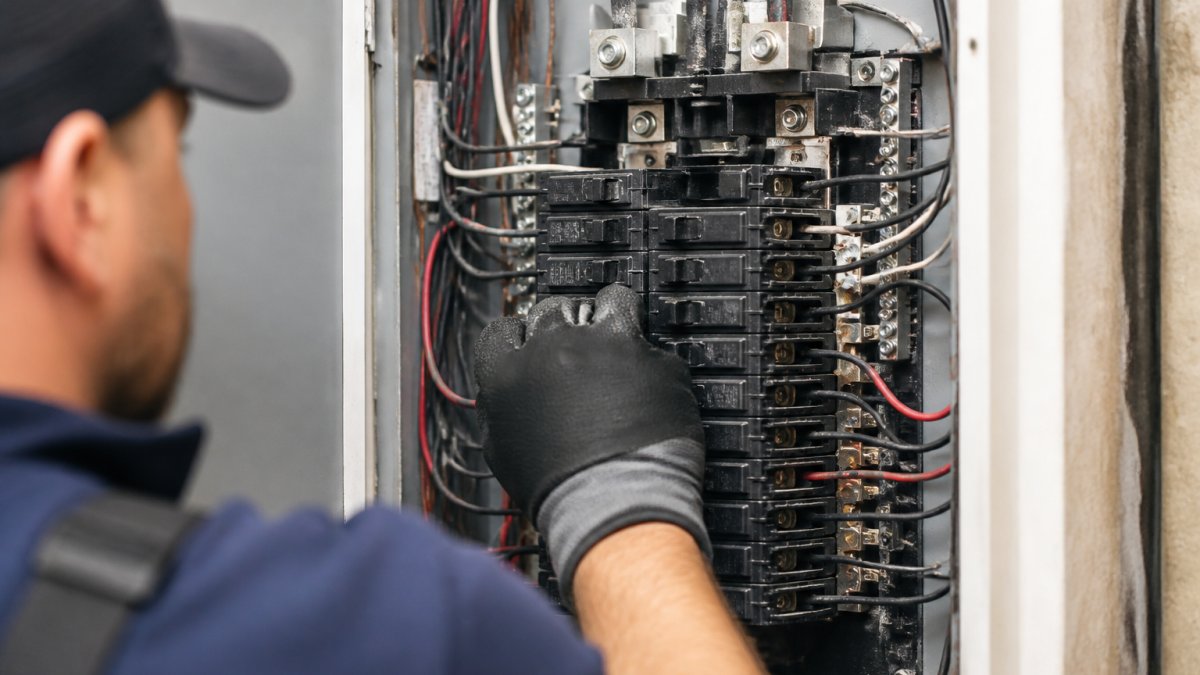
Labor typically represents 40-60% of the total project cost and covers the electrician's time for disconnection, installation, testing, and code compliance. Labor is often quoted as a flat rate for a straightforward replacement or as an hourly rate if complications arise.
Panel and breakers are the equipment core. The panel enclosure itself costs $300-$800 depending on amperage and brand; a 100-amp panel is typically less expensive than a 200-amp unit.
Service entrance cable and conduit connect the meter to the panel. If your existing wire is adequate and reusable, this cost is minimal. If the electrician must run new XHHW cable or upgrade conduit due to code changes, damage, or amperage increases, expect $300-$800 depending on distance and whether the wire runs through walls or along the exterior.
Meter base and utility connection costs vary by utility company and whether an upgrade is required. A new meter base rated for 200-amp service costs $150-$400 for equipment and installation. Some utilities charge a separate connection or upgrade fee ($100-$300) to activate higher amperage at your property.
Permits and inspections are mandatory and typically cost $50-$300 depending on jurisdiction. This fee covers the permit application and at least one final inspection; some areas require a pre-work inspection as well.
Miscellaneous materials and hardware include disconnect switches, grounding equipment, fasteners, and safety devices. These typically add $100-$250 to the bill.
When comparing quotes, ask each contractor to itemize these categories. A quote that lists only "panel replacement: $4,500" without breaking down labor, equipment, permits, and utility work makes it difficult to understand where money is going or why two contractors' prices differ.
Electrical Panel Replacement Permit Cost and Timeline
Permits are mandatory for all electrical panel work and exist to ensure your installation meets current National Electrical Code (NEC) standards and local amendments. The permit cost itself is usually modest, typically $50-$300 depending on your jurisdiction, but the real timeline impact comes from utility coordination and inspection scheduling.
Permit application and approval typically take 3-7 business days. Your electrician usually handles the application, but you should verify that the permit is obtained before work begins. Some jurisdictions allow work to start immediately upon application; others require written approval before the first nail is driven. Confirm this with your local building department or electrician.
Utility company coordination is often the longest lead time. Before your electrician can safely disconnect the old panel, your utility company must schedule a power shutoff. This typically requires 5-10 business days' advance notice, though some utilities offer expedited scheduling for panel replacements.
Inspection scheduling adds another 1-3 weeks depending on local inspector availability. Most jurisdictions require a final inspection after the panel is installed and energized. Some areas also require a pre-work inspection to verify the old panel's condition and ensure the electrician is prepared. If your area requires both, plan for two separate inspection appointments.
Like-for-like replacement versus upgrade timelines differ. A like-for-like 100-amp-to-100-amp swap typically follows the standard timeline: permit (3-7 days), utility coordination (5-10 days), installation (1 day), inspection (1-3 weeks). Total elapsed time is usually 3-5 weeks.
Power interruption planning is critical. Your home will be without electricity during the utility shutoff window and will remain without power until the panel is installed, tested, and the utility reconnects service. This typically means 4-8 hours without power on installation day, though complex projects or utility delays can extend this.
Your electrician should handle all coordination with the utility company and building department as part of the service. This removes the administrative burden and ensures nothing falls through the cracks.
Electrical Panel Replacement Time and Project Duration
The actual installation of a new electrical panel typically takes one day for a straightforward replacement, usually 6-8 hours of work. However, the total project timeline extends beyond the installation itself.
Before work begins, you'll need to schedule the electrician, arrange a utility company shutoff appointment, and obtain any required permits. These preliminary steps often take 1-3 weeks. After the panel is installed, you'll need to schedule the final inspection, which may take another week depending on inspector availability. From start to finish, expect 3-6 weeks for the entire process, though simpler projects sometimes move faster.
The power shutoff is a critical part of the timeline. Your utility company controls when they can disconnect service, and you'll need to coordinate that appointment with your electrician's schedule. Some utilities offer same-day or next-day shutoff for panel replacements, while others require advance notice. This coordination is essential and often determines your project's actual start date.
Replacement vs. Repair: When to Upgrade Your Panel
Not every electrical problem requires a full panel replacement. Understanding when repair makes sense versus when replacement is necessary helps you avoid overspending on work you don't actually need.
A panel repair is appropriate when you have a single malfunctioning breaker, a tripped main breaker that keeps resetting, or corrosion on specific terminals that can be cleaned and reconnected. These repairs address isolated problems without replacing the entire system. However, if your electrician discovers that the panel itself is damaged, the bus bars are deteriorated, or the main disconnect is failing, replacement becomes the safer and more cost-effective choice.
Replacement becomes necessary when your panel is outdated and no longer supports your electrical needs. If you're adding a major load, an EV charger, a heat pump, or a whole-house renovation, your existing panel may not have capacity. In these cases, upgrading the electrical panel replacement is the only real solution.
Age is also a factor. Panels from certain manufacturers or eras have known safety issues or are no longer manufactured. If you have a Federal Pacific Electric panel, Zinsco panel, or other recalled equipment, replacement is strongly recommended regardless of whether the panel is currently malfunctioning. Your electrician can advise whether your specific panel model has known issues.
Hidden Costs and Site Conditions to Expect
Several hidden costs frequently surprise homeowners during panel replacement projects. Understanding these potential expenses helps you budget more accurately and avoid sticker shock when the bill arrives.
Meter base replacement is common when upgrading from 100-amp to 200-amp service. Your utility company may require a new meter base rated for the higher amperage, and you'll pay for that equipment and installation. Some utilities charge a connection fee for this upgrade as well.
Service entrance upgrades can be expensive if your existing wiring is undersized or damaged. If the electrician discovers that the wire running from the meter to your panel is corroded, cracked, or undersized for the new panel's capacity, it must be replaced. Running new service entrance cable through walls or conduit adds labor and materials costs.
Accessibility issues drive up labor time significantly. If your panel is located in a cramped basement corner, behind stored items, or in a difficult-to-reach location, the electrician will need extra time to work safely. Some homes require temporary relocation of the panel to a more accessible location, which increases the project scope considerably.
Outdated or corroded wiring inside the panel may need replacement. If the electrician finds that existing circuit wires are damaged, improperly sized, or don't meet current code, they'll recommend replacement. This work extends the project timeline and increases costs.
Finally, utility company coordination fees occasionally apply. Some utilities charge a fee to schedule the power shutoff or to upgrade their connection to handle increased amperage. These fees vary by region and utility provider but should be anticipated during your planning phase.
Electrical panel replacement is a significant investment, but it's essential for home safety and supporting modern electrical demands. The actual cost depends on your specific situation, your current panel's amperage, whether you're upgrading capacity, your home's age and wiring condition, and your location.
Frequently Asked Questions
How long does electrical panel replacement take?
A standard like-for-like panel replacement typically takes 4 to 8 hours, depending on your home's wiring configuration and the electrician's access to the panel. If you're upgrading service capacity or running new wiring from the utility line, the project can extend to a full day or require multiple visits. Power will be shut off during installation, so plan accordingly.
Do I need a permit to replace an electrical panel?
Yes. Panel replacement requires a permit from your local building department in most jurisdictions. The permit ensures the work meets current electrical code and safety standards. Your electrician typically handles permit applications, and inspection fees are usually $50 to $200. Skipping permits can void insurance coverage and create liability if problems arise later.
What's the difference between replacing and upgrading an electrical panel?
Replacement means installing a new panel with the same amperage as your old one (like-for-like). Upgrading means increasing service capacity, such as moving from 100-amp to 200-amp service. Upgrades cost more because they require utility coordination, new service entrance wiring, and often a larger main breaker. Choose replacement if your panel is failing but your electrical capacity is adequate; choose upgrade if you're adding major loads like EV chargers or expanding your home.
What factors affect the total cost of panel replacement?
Panel type, amperage, labor rates in your area, permit and inspection fees, utility coordination, site accessibility, and the condition of existing wiring all influence cost. Older homes with outdated wiring or difficult panel access cost more. Upgrading from 100-amp to 200-amp service adds significant expense because it requires new service entrance cable and utility involvement. Get an itemized quote that breaks down labor, materials, permits, and utility fees.