 how-to
How to Fix Flickering Lights: A Safe DIY Guide
Table of Contents
- Why Are My Lights Flickering? Start With the Pattern
- Tools and Safety Basics Before You Troubleshoot
- How to Fix Flickering Lights: A Step-by-Step Checklist
- How to Fix Flickering LED Can Lights
- Flickering Lights When Appliances Turn On: What It Means
- When to Call an Electrician for Flickering Lights
- Conclusion: Fix What You Can, Call for What You Can't
- Frequently Asked Questions
Last Updated: October 8, 2026
Why Are My Lights Flickering? Start With the Pattern
Flickering lights are one of the most common electrical complaints, and the pattern tells you where the problem lives. A single blinking bulb is a very different issue from every light in the house pulsing at once. Before you touch a tool, answer four questions that narrow the fault to one of four layers: the bulb, the fixture, the circuit, or the service.
The Four Questions That Isolate the Fault
- How many lights flicker? One fixture points to the bulb, socket, or dimmer. Several fixtures on the same circuit point to a shared connection or an overloaded circuit. Lights across multiple circuits point to the panel, the main service, or the utility supply.
- When does it flicker? Only when a specific appliance runs suggests a voltage drop or a shared neutral. Constantly, regardless of load, suggests a loose connection or a failing driver. Randomly and briefly suggests a loose neutral or a breaker that is starting to fail.
- Does it flicker at the same rhythm every time? A steady blink or pulse often traces to an LED driver or a dimmer. An irregular, unpredictable flicker more often traces to a mechanical connection that is loosening and re-making contact.
- Does the brightness change, or does the light cut out entirely? A dimming or pulsing light points to a supply or driver issue. A light that blinks fully off and on points to an intermittent connection.
Pattern-to-Cause Decision Tree
Work down this list and stop at the first row that matches what you see. Each row tells you the most likely layer and whether it is a do-it-yourself check or a call to a licensed electrician.
| What You Observe | Most Likely Layer | First Safe Check | DIY or Pro? |
|---|---|---|---|
| One bulb flickers, others on the same fixture are steady | Bulb | Swap in a known-good bulb of the same type | DIY |
| One fixture flickers, bulb swaps do not help | Socket or fixture wiring | Power off, inspect the socket contacts | DIY for the bulb and socket; pro for terminals |
| One LED flickers only when dimmed | Dimmer or driver | Confirm the bulb is dimmable and the dimmer is LED-rated | DIY |
| Several lights on one circuit flicker together | Shared connection or overloaded circuit | Note which breaker controls them | Pro |
| Lights dim briefly when the AC, dryer, or fridge starts | Voltage drop or shared neutral | Note whether it happens every time | Pro if it repeats |
| Lights in different rooms brighten and dim in opposite directions | Loose neutral or service issue | Stop using the circuit | Call now |
| Every light pulses, or you smell burning | Panel, service, or utility | Switch off the main and leave it off | Call now |
Occasional Versus Persistent Flickering
Intermittent flickering is hardest to pin down because it hides when you are watching. Persistent flickering is easier: something is loose, mismatched, or failing. Log the time of day, which lights flickered, and what was running. A pattern repeating at the same time each day often points to a utility or neighborhood load issue; one tied to a specific appliance points inside the home.
Many cases of how to fix flickering lights come down to a loose bulb or a dimmer mismatch, but some patterns point to a real hazard. This guide shows what you can safely fix yourself and when to call a pro.
Tools and Safety Basics Before You Troubleshoot
Safety comes before speed. Gather a few basic tools and follow three hard rules.
What you'll need:
- A non-contact voltage tester
- A screwdriver set (flathead and Phillips)
- A flashlight or headlamp
The three rules:
- Switch off the circuit at the breaker panel before working on any fixture.
- Test the circuit with a voltage tester to confirm the power is off.
- Never work on a panel or wiring you don't understand.
If you're not comfortable opening a fixture or panel, stop. That's good judgment, not failure.
How to Fix Flickering Lights: A Step-by-Step Checklist
Work this checklist top to bottom and stop as soon as the flickering stops.
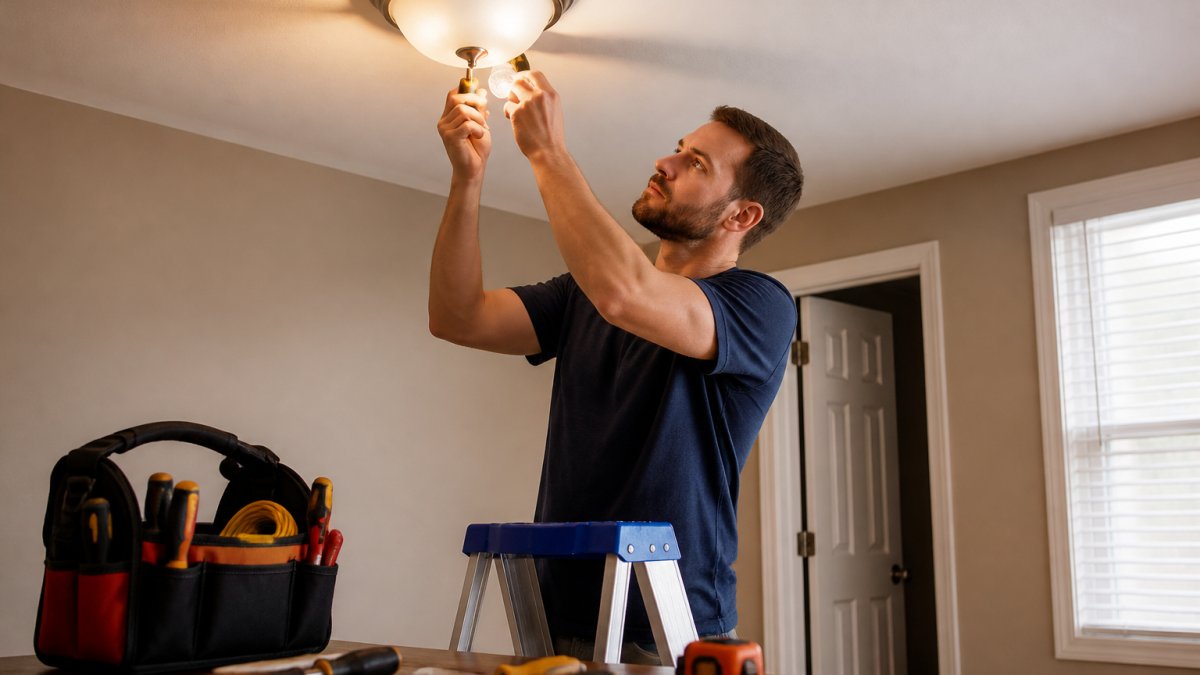
Step 1: Tighten the Bulb and Check the Socket
A loose bulb is the most common cause, so start here. Switch off the circuit, then check the bulb and socket.
- Turn the bulb gently to see if it's loose, then snug it in.
- Look inside the socket for bent or dirty contacts.
- Check for a worn or cracked socket, which needs replacing.
If a bulb works in one fixture but not another, the fixture is the problem, not the bulb.
Step 2: Test the Dimmer Switch and LED Compatibility
An LED bulb on an old dimmer is a classic flicker source. Many dimmers were built for incandescent bulbs, and the mismatch causes blinking, buzzing, or a low glow.
- Check that your dimmer is rated for LED bulbs.
- Confirm the bulb is dimmable. Not all LEDs are.
- Swap in a compatible dimmer if yours isn't LED-rated.
A compatible dimmer and a dimmable LED bulb solve most dimmer-related flickering.
Step 3: Inspect Wiring, Breakers, and Connections
If steps 1 and 2 don't fix it, the problem is likely behind the wall or at the panel, where most homeowners should call a pro.
- Check for loose wires at the switch and fixture terminals.
- Look for a tripped or warm breaker at the panel.
- Feel for a warm switch plate, which signals a loose connection.
Loose connections at terminals and breakers are a fire risk. If you see heat or damage, stop and call an electrician.
Step 4: Verify the Fix and Watch for Repeat Flickering
Turn the circuit back on and watch the light for a few minutes. Then check again the next day.
- Confirm the flicker is gone under normal use.
- Turn on nearby appliances to test for voltage drops.
- Watch for repeat flickering over the next week.
How to Fix Flickering LED Can Lights
LED can lights flicker for reasons specific to how they're built. Recessed cans often use an LED driver or retrofit kit, and that's usually where the trouble starts.
Common causes for flickering LED can lights:
- A failing LED driver: the driver regulates power to the LED, and when it fails, the light flickers.
- A dimmer mismatch: the dimmer and the driver aren't compatible.
- Loose wiring at the can: vibration and heat loosen connections over time.
Start by swapping the bulb or retrofit kit. If the flicker continues, the driver or wiring is the likely cause. That's a job for a licensed electrician.
Flickering Lights When Appliances Turn On: What It Means
Lights that dim or flicker when a big appliance kicks on usually point to a voltage drop. When a fridge, AC unit, dryer, or well pump starts, its motor draws a surge of current for a fraction of a second, pulling voltage down across the wiring between the panel and the light. On a properly sized circuit, the dip is brief and the light recovers immediately.
Normal Inrush Dip Versus a Real Problem
A quick, shallow dim lasting less than a second that only affects lights near the appliance is normal, especially in older homes with long wire runs. These signs point to something else:
- The dim is deep enough that the light nearly goes out.
- The light stays dim for more than a second after the appliance starts.
- Lights on the opposite side of the house dim at the same time.
What Causes an Abnormal Voltage Drop
Three mechanisms account for most abnormal cases:
- A loose neutral connection. The neutral carries return current, and a loose neutral at an outlet, the panel, or the service mast raises resistance. That resistance shows up as voltage that swings with load. A loose neutral is a shock and fire risk and can damage electronics.
- An overloaded circuit. If the appliance and the lights share a circuit that is already near its rating, the added load drags voltage down. This is common in older kitchens and laundry rooms where a single circuit feeds many outlets.
- A failing main breaker or service conductor. A breaker that is heating up under load, or a service conductor with a compromised connection, will show voltage sag that gets worse over time. This is a panel-level problem, not a fixture-level one.
How to Tell Whether the Problem Is Inside or Outside the Home
The most useful distinction is whether the flicker follows the appliance or the house. If only lights on the same circuit as the appliance dim, the problem is likely inside the home on that circuit.
Signs that point to the utility side rather than your wiring:
- Lights brighten and dim in different rooms at the same time, with no appliance running.
- The flicker affects the whole house and follows a daily or neighborhood pattern.
- Neighbors report the same flicker at the same times.
When you see those signs, contact your utility first. Utilities own the service drop and meter and will investigate supply-side voltage problems at no cost.
What to Record Before You Call
A short log saves time and money on the service call. Note the triggering appliance, which lights are affected, whether the dim is brief or sustained, and whether lights brighten when the appliance shuts off.
If the flicker happens every time an appliance starts, get it checked. A loose neutral can damage electronics and is a shock risk, and a failing main breaker will only get worse.
When to Call an Electrician for Flickering Lights
Call a licensed electrician when the flicker is widespread, repeats, or comes with any warning sign.
| What You See | Likely Cause | DIY or Pro? |
|---|---|---|
| One bulb flickers | Loose bulb or bad socket | DIY |
| LED on an old dimmer flickers | Dimmer mismatch | DIY |
| Several lights on one circuit flicker | Loose connection | Pro |
| Lights dim when appliances start | Voltage drop or loose neutral | Pro |
| Every light pulses, or burning smell | Service or panel fault | Call now |
If you've worked through the checklist and the flicker is still there, bring in help. A pro can test the circuit, check the panel, and find the fault safely.
Conclusion: Fix What You Can, Call for What You Can't
Flickering lights range from a five-minute bulb fix to a genuine safety hazard, and the pattern tells you which one you're dealing with. Tighten the bulb, check the dimmer, and inspect what you can see. Then stop at the panel.
If the flicker is widespread, repeats, or comes with heat, buzzing, or a burning smell, don't gamble with it. T6 Electrical Contractor handles electrical repairs, panel checks, and safety inspections for homes and businesses, with a personalized consultation to figure out what actually needs fixing and what doesn't.
Frequently Asked Questions
Can a loose light bulb cause flickering?
Yes. A bulb that isn't fully seated makes intermittent contact with the socket, which causes flickering, especially when someone walks across the floor or a door closes. Turn off the switch, let the bulb cool, then tighten it gently. If the socket feels loose or the bulb wobbles after tightening, the socket contacts or the fixture itself may need repair, and that's a job for an electrician.
Do LED lights flicker before they burn out?
They can, but it's not a reliable warning sign. More often, flickering LED bulbs point to a dimmer that isn't compatible with the LED driver, a loose connection, or a failing driver inside the bulb. Try the bulb in a different fixture on a standard switch. If it still flickers, replace the bulb. If the new bulb is steady, the problem was the bulb or the dimmer, not your house wiring.
Why does a light flicker when I turn on an appliance?
Flickering lights when appliances turn on usually means a voltage drop on that circuit. A large motor, like a refrigerator, air conditioner, or microwave, draws a surge of current when it starts, briefly lowering voltage to nearby lights. If it happens on one circuit only, check for loose connections at that outlet or fixture. If it happens throughout the house, the issue may be a loose neutral or an undersized service, which needs professional testing.
When should I call an electrician about flickering lights?
Call an electrician if the flickering is persistent rather than occasional, affects multiple rooms at once, comes with buzzing, burning smells, or warm switch plates, or continues after you've tightened bulbs and checked the breaker panel. These signs point to wiring, breaker, or utility-side voltage problems that aren't safe to diagnose yourself. A licensed electrician can test the circuit, the panel, and the service connection to find the actual cause.