 ultimate-guide
Are Professional Electrical Maintenance Services Worth It?
Quick Summary
Professional electrical maintenance is worth it because scheduled inspection and testing catch loose connections, overheating, and failed protective devices before they cause fires, injuries, or costly outages. Routine work also tends to lower repair costs and extend the life of motors, panels, and fixtures.
- Electrical fires usually start with loose connections or aged insulation that build up heat over months.
- Maintenance visits produce documentation useful for budgeting, renovation planning, and insurance or code inquiries.
- Unplanned outages cost more than the repair itself, since lost productivity and emergency labor add up quickly.
- Homes typically benefit from a professional inspection every few years, with commercial buildings checked at least annually.
Table of Contents
What Professional Electrical Maintenance Actually Covers
Most homeowners and property managers only call an electrician when something breaks. That reactive habit is costly, and it's dangerous in ways that don't show up until a panel overheats or a breaker fails to trip. Professional electrical maintenance is the scheduled inspection, testing, and minor correction of the wiring, panels, and devices that keep a building running safely. National Fire Protection Association electrical safety overview
A proper maintenance visit goes well beyond checking whether the lights turn on.
A maintenance visit is distinguished from a simple service call by the documentation it produces, which can help when budgeting, planning renovations, or responding to an insurance or code inquiry.
How Preventive Electrical Maintenance Protects Against Fire and Injury
Electrical fires rarely start with a dramatic spark. They usually begin with a loose connection that heats up over months, insulation that has cracked from age, or a circuit that has been quietly overloaded. The National Fire Protection Association tracks electrical distribution equipment as a recurring cause of structure fires, and most of those failures are preventable with routine inspection. NFPA reports on electrical fire causes
Preventive work targets these conditions. Inspection can reveal hot spots and loose connections, and testing protective devices helps confirm that breakers and GFCIs will trip when they should. Warning signs to check in an electrical panel lists the specific indicators a reader can look for.
Injury risk drops for the same reason. Shock hazards from damaged grounding, exposed conductors, or failed GFCI protection are far easier to address during a scheduled visit than after someone is hurt. Workplaces face an added obligation here, since the Occupational Safety and Health Administration expects employers to keep electrical equipment in safe working condition. OSHA electrical safety standards
Lower Repair Costs and Less Unplanned Downtime
The financial case for maintenance is simpler than most people expect. A failing connection that costs a few dollars to tighten today can cause a failed compressor, damaged equipment, or a shutdown that halts operations. Unplanned outages are expensive in lost productivity alone, before counting emergency labor rates and rushed replacement parts.
Without that inspection, the same fault often surfaces at 6 p.m. on a Friday, which is when repairs cost the most.
For commercial properties, the cost of downtime often dwarfs the cost of the maintenance program itself. Tenants, customers, and staff all feel an outage, and recovery can take longer than the repair.
Longer Equipment Life and Better Energy Efficiency
Electrical equipment ages under heat, vibration, and load. Motors draw more current when bearings wear or connections loosen. Lighting circuits waste energy when ballasts degrade or controls drift out of calibration. Routine maintenance addresses these issues early, which extends the service life of motors, panels, and fixtures and keeps consumption closer to design levels.
Energy efficiency gains are real but vary widely by building. Clean, properly torqued connections reduce resistive losses, and correctly adjusted controls prevent lights and HVAC loads from running longer than necessary.
Building an Electrical Maintenance Plan for Your Property
A maintenance plan turns occasional inspections into a repeatable program. It defines which assets get checked, how often, by whom, and what gets recorded. Most plans cover the main service, distribution panels, critical motors, emergency systems, and high-load circuits, with lighter checks on general branch wiring. See what a commercial electrical maintenance plan typically costs to budget for the program.
A practical plan starts with an inventory of your equipment and its age, then ranks each asset by the consequence of failure. A panel feeding refrigeration or life-safety systems deserves tighter intervals than a storage room outlet. Write the schedule down, assign responsibility, and keep the results in one place so trends are visible across years.
What a Thorough Electrical System Inspection Checklist Includes
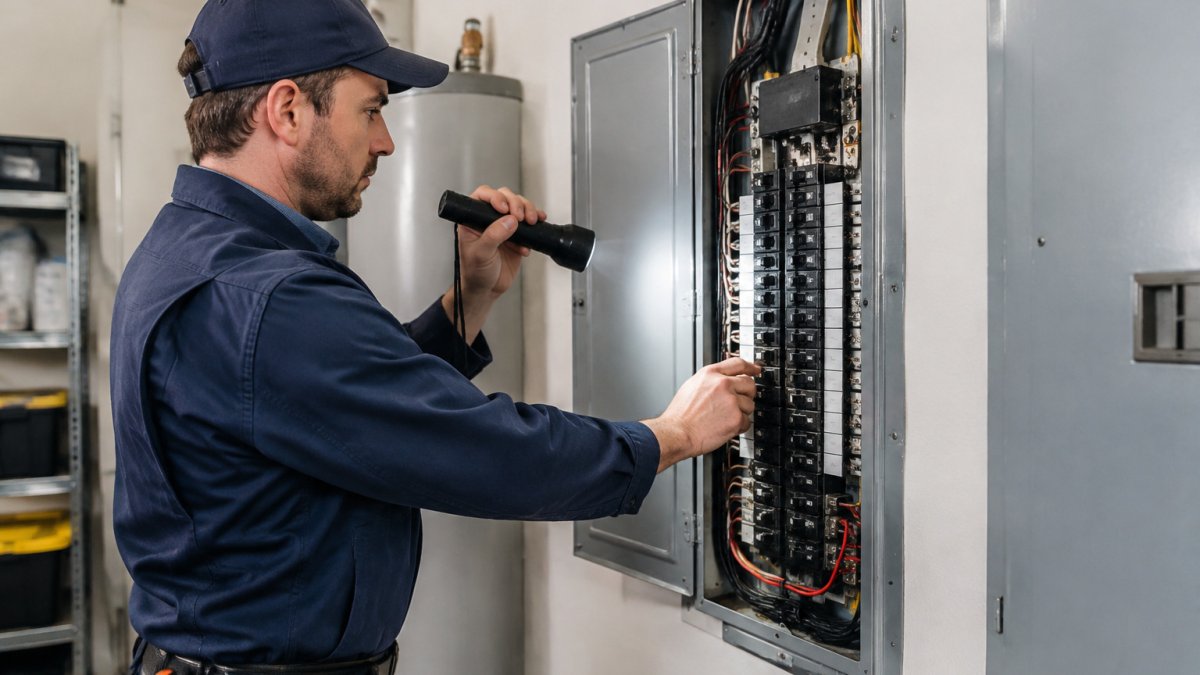
A useful inspection checklist is specific enough that two different technicians would check the same things. At minimum, it should cover visual inspection of panels and enclosures for heat discoloration and labeling accuracy, tightness verification of accessible connections, GFCI and AFCI testing, grounding and bonding checks, and inspection of cords, receptacles, and fixtures for damage.
Add load and thermal observations where equipment allows. Record breaker and conductor temperatures, note any circuit running near its rated capacity, and flag panels that have been modified without updated labeling. For commercial systems, include emergency lighting battery tests, transfer switch operation, and motor starter condition.
The checklist should produce a result for every line item, whether pass, monitor, or repair needed. Blank items are how faults slip through.
How Often to Schedule Electrical Maintenance for Homes and Commercial Buildings
Frequency depends on the building type, equipment age, and how heavily the system is loaded. Homes typically benefit from a professional inspection every few years, or sooner after renovations, major appliance additions, or any signs of trouble. Older homes and homes with known panel issues warrant more frequent review.
Commercial buildings usually need annual inspection at minimum, with critical systems and high-load equipment checked more often. Commercial building safety inspection costs and what they involve can help you plan how often to schedule visits. Facilities with heavy motor use, industrial processes, or life-safety requirements may need quarterly thermal scans and periodic testing of protective devices. Schedule visits before peak seasons, since cooling loads in Texas summers push panels and feeders hard.
Booking Your First Professional Electrical Inspection
If you have never had a professional review your system, start with a baseline inspection.
When you contact us, describe your property type, the age of your panel if you know it, and any symptoms you have noticed, such as flickering lights, warm outlets, or breakers that trip repeatedly. Pricing depends on the size and condition of your system, so please contact T6 Electrical Contractor for a current quote. For current availability and to schedule, book an electrical repair service through our site, or review the commercial maintenance services we offer if you manage a larger property.
Frequently Asked Questions
How often should electrical systems be professionally inspected?
Most homes benefit from a professional electrical inspection every three to five years, or sooner if you notice flickering lights, breakers that trip often, warm outlets or a panel that is more than 25 years old. Commercial buildings usually need more frequent checks, often annually, because heavier loads and daily use wear components faster. Facilities with critical equipment may schedule quarterly thermal scans and connection tightening. The right interval depends on the age of the system, how it is used and any code or insurance requirements that apply to your property. A licensed electrician can recommend a schedule after a baseline inspection.
Can professional electrical maintenance help prevent electrical fires?
Yes. Electrical fires often start at loose connections, overheated breakers, damaged insulation or overloaded circuits, and these problems usually develop gradually before they cause a failure. A professional maintenance visit tightens terminations, tests breakers and GFCI and AFCI devices, checks for heat damage at panels and outlets, and identifies wiring that no longer meets current National Electrical Code requirements. Catching these conditions early reduces the risk of a fire and protects both people and property. Maintenance does not eliminate every risk, but it addresses the most common causes.
What does an electrician check during electrical maintenance?
A typical visit includes inspecting the main panel and subpanels for signs of heat, corrosion or loose conductors, testing circuit breakers and ground-fault protection, checking outlets and switches for damage or poor connections, and reviewing the grounding and bonding system. Electricians also look for overloaded circuits, outdated wiring, and any unpermitted modifications. In commercial facilities, the visit may add infrared scanning of connections under load and a review of emergency lighting and backup power systems. Findings are usually documented with photos and a prioritized repair list so you can plan the work.
What is included in an electrical maintenance plan?
An electrical maintenance plan is a written schedule of recurring inspections, testing and servicing tailored to your property. It typically lists which systems will be checked, how often each task occurs, which records will be kept and who is responsible for follow-up. For a home, the plan may cover annual panel checks and outlet testing. For a commercial building, it may add load monitoring, thermal imaging, generator testing and documentation for insurers or inspectors. Having a plan makes costs more predictable and helps avoid the situation where problems are only addressed after something fails.