 how-to
Commercial Electrical Maintenance Services: A Complete Guide
Last Updated: October 23, 2026
Quick Summary
Commercial electrical maintenance services include routine inspections of panels, wiring, outlets, and lighting, along with diagnostics of transformers, generators, and motors to keep electrical systems running safely and efficiently. Preventive maintenance catches problems before they become emergencies, while emergency repair minimizes downtime when failures occur.
- Monthly inspections should check for flickering lights, tripped breakers, warm outlets, and test emergency lighting systems
- Quarterly professional testing detects hidden grounding and safety issues invisible to visual inspection
- Annual load testing verifies the system handles peak demand safely without overheating or tripping breakers
- Service contracts provide predictability with monthly or annual fees for routine maintenance plus separate billing for emergency repairs
- Proper maintenance reduces downtime frequency, extends equipment lifespan, and often lowers energy costs through efficiency improvements
Table of Contents
- What Commercial Electrical Maintenance Services Include
- Why Preventive Electrical Maintenance Matters for Your Business
- Commercial Electrical Inspection: What Gets Checked and Why
- Electrical Maintenance Checklist for Commercial Buildings
- Creating an Electrical Maintenance Schedule That Works
- How to Choose a Commercial Electrical Maintenance Contractor
- Maintenance Costs and Budgeting for Electrical Systems
- Measuring Results: How Maintenance Reduces Downtime and Extends Equipment Life
- Frequently Asked Questions
What Commercial Electrical Maintenance Services Include
Commercial electrical maintenance services dfw businesses rely on keep electrical systems running safely and efficiently. At T6 Electrical Contractor, we know facilities depend on uninterrupted power, downtime costs money, disrupts operations, and creates safety hazards.
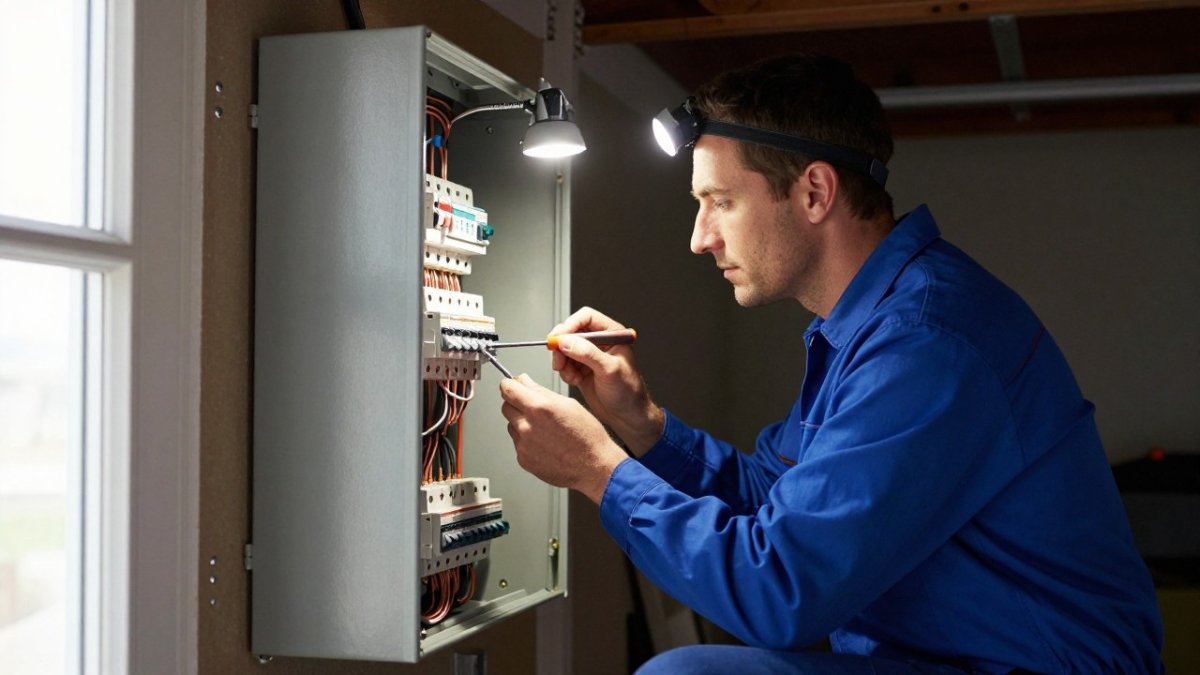
These services include routine inspections of panels, wiring, outlets, and lighting. Technicians test breakers, verify grounding, check for wear or damage, and identify fire hazards. Many programs also include diagnostics of transformers, generators, motors, and other critical systems.
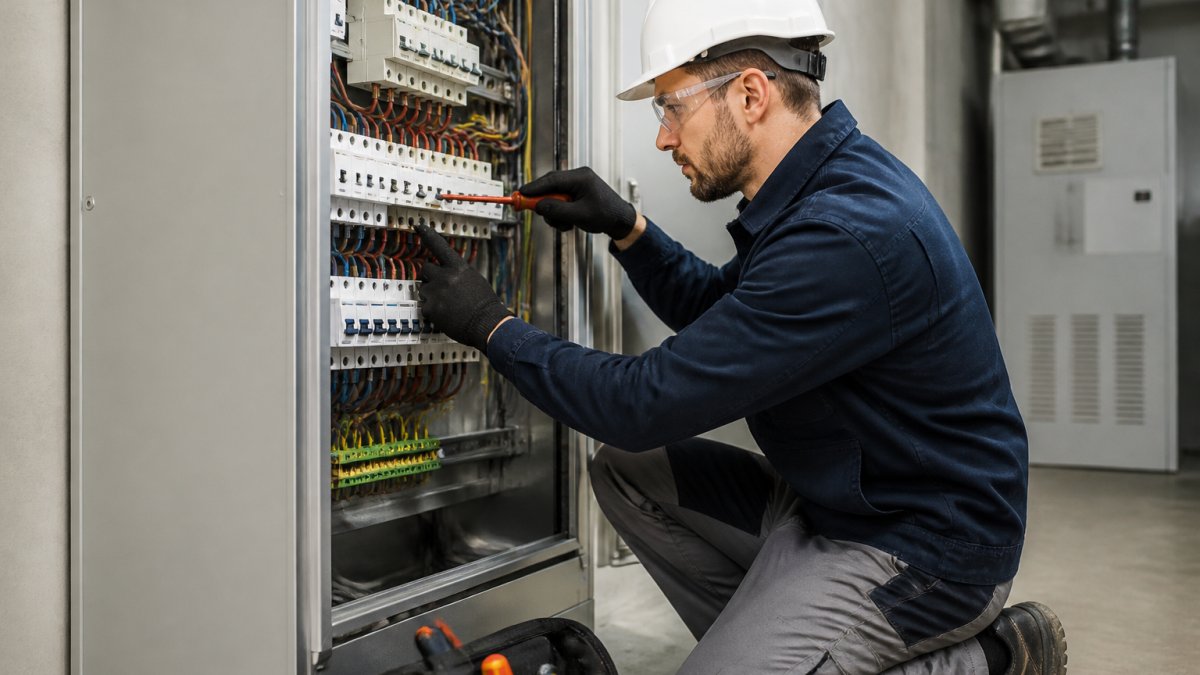
Preventive maintenance covers cleaning and tightening connections, replacing worn components before failure, and updating wiring or panels that no longer meet code. Emergency repair rounds out the offering: when something breaks, a reliable commercial electrician responds quickly to minimize downtime.
Scope varies by facility type, a retail storefront needs different attention than a manufacturing plant. Consultation ensures the maintenance plan fits your operation.
Why Preventive Electrical Maintenance Matters for Your Business
Proactive maintenance means controlling costs; reactive repairs mean scrambling to manage crises. Many owners don't prioritize preventive electrical maintenance until something fails, when damage is often more extensive than if caught earlier.
Preventive maintenance catches problems before they become emergencies. A loose connection can overheat and cause a fire; aging wiring that passes a visual inspection may fail under load; corroded outlets waste energy and create shock hazards. Regular inspections catch these while they're manageable.
Well-maintained equipment lasts longer and performs more reliably. Panels, lighting, and specialized equipment degrade over time; preventive maintenance slows that and avoids sudden failures that force shutdowns while you wait for an emergency electrician.
Electrical hazards can injure employees or customers. Faulty wiring, damaged outlets, and overloaded circuits create real risks. Regular inspections keep your facility compliant and reduce liability, and a safe workplace keeps your team productive.
Commercial Electrical Inspection: What Gets Checked and Why
A thorough commercial electrical inspection evaluates the condition and compliance of your entire electrical system, a detailed assessment that identifies obvious hazards and subtle problems before they become serious.
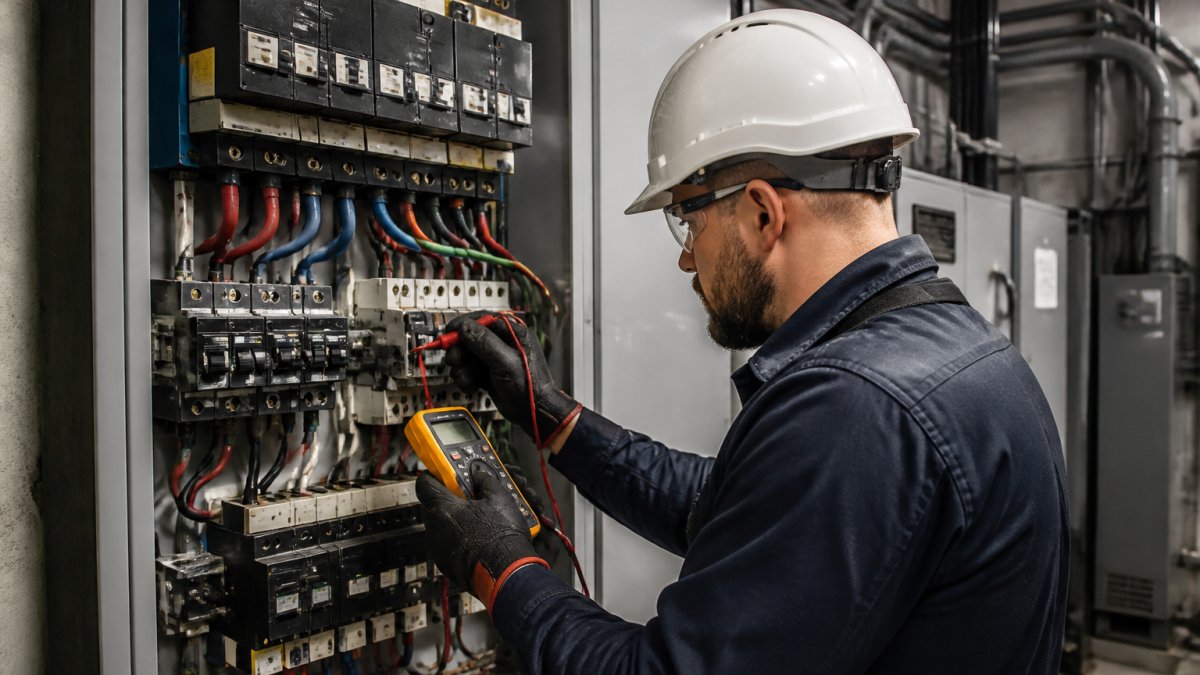
Inspectors start with the service panel, where power enters and gets distributed.
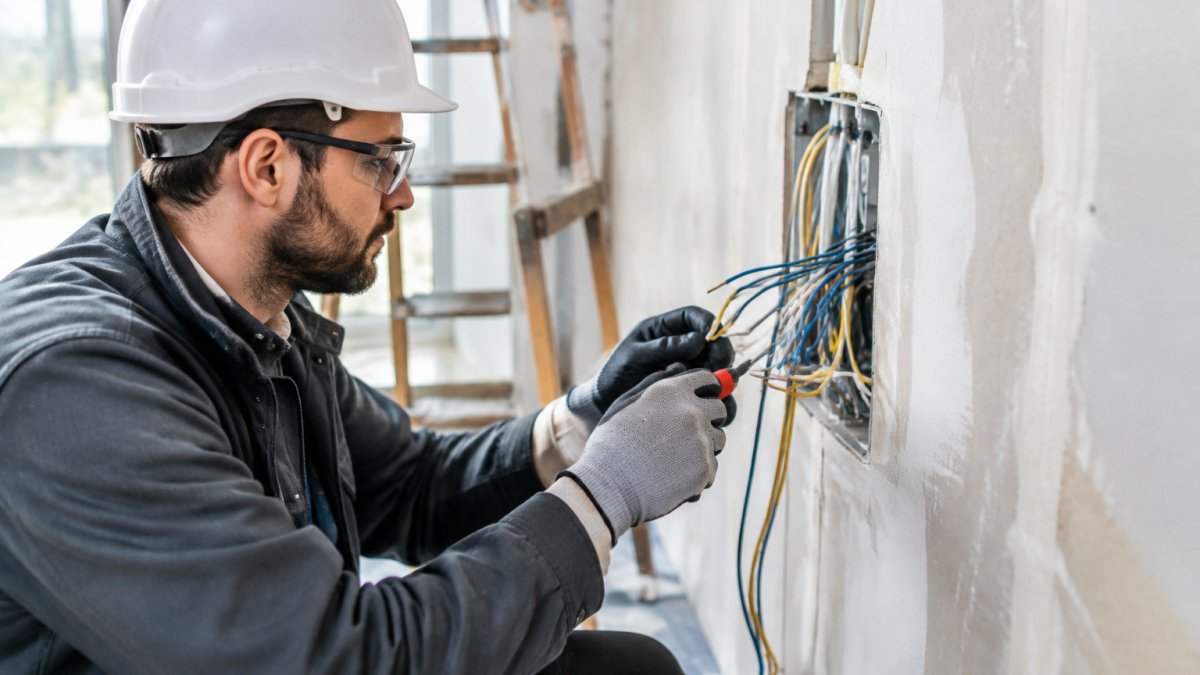
Wiring gets close attention: inspectors look for damage, improper installation, deterioration, or outdated materials, and verify wiring is secured, connections are tight and corrosion-free, and gauge matches amperage requirements.
Outlets and switches are tested for grounding and polarity; damaged or loose outlets create hazards and waste energy.
Lighting is evaluated for functionality, safety, and efficiency: fixtures properly installed, bulbs matching specifications, emergency lighting operational. Many businesses find quick wins here, LED upgrades cut energy consumption significantly.
Specialized equipment, transformers, generators, motors, HVAC systems with electrical components, all get tested to verify they're operating within specifications and not creating hazards or wasting energy.
Electrical Maintenance Checklist for Commercial Buildings
A structured checklist ensures nothing gets overlooked and tracks what's been done and when. It breaks into monthly, quarterly, and annual tasks based on how critical each item is.
Monthly Tasks
Monthly inspections are quick but important. Walk through your facility and check for flickering lights, tripped breakers, warm outlets, or burning smells, warning signs that something needs attention.
Test emergency lighting to confirm backup systems work if main power fails, a safety requirement and a practical necessity before an actual emergency (NFPA 101).
Verify panels and equipment stay accessible and unobstructed. Stored boxes or furniture in front of panels create hazards and block technicians during repairs.
Review maintenance logs and work orders from the previous month to spot patterns, a circuit that keeps tripping signals something deeper needs investigation.
Quarterly and Annual Tasks
Quarterly work goes deeper. A licensed electrician tests all outlets for grounding and polarity, catching problems invisible to visual inspection, and inspects wiring for damage, especially in areas prone to moisture or temperature extremes.
Check breakers for correct function, looseness, or corrosion. Tighten loose connections and clean equipment and panels to remove heat-trapping dust and debris that causes premature failure.
Annual inspections are comprehensive: load test the system to verify it handles peak demand without overheating or tripping breakers, thoroughly inspect the service panel including the main disconnect and subpanels, and test all grounding and bonding connections.
Review your system against current code requirements. Codes change and older installations may no longer meet standards; knowing where you fall short helps prioritize upgrades.
| Maintenance Task | Frequency | Why It Matters |
|---|---|---|
| Visual inspection for obvious hazards | Monthly | Catches problems early before they become emergencies |
| Test emergency lighting | Monthly | Ensures backup systems work when needed |
| Professional outlet testing | Quarterly | Detects hidden grounding and safety issues |
| Inspect wiring and connections | Quarterly | Identifies deterioration and loose connections |
| Load testing of electrical system | Annually | Verifies system can handle peak demand safely |
| Full panel inspection and code review | Annually | Ensures compliance and identifies upgrade needs |
Creating an Electrical Maintenance Schedule That Works
An effective maintenance schedule balances frequency with practicality, catching problems before they become emergencies while fitting your operations and budget.
Start by documenting your electrical systems: map panels, circuits, major equipment, and specialized systems, and note how critical each is. A circuit powering your main production line needs more attention than one serving a storage closet.
Work with a commercial electrician to establish baseline conditions. A thorough initial inspection identifies existing problems to correct before a regular cycle begins. T6 Electrical Contractor's consultation approach helps you understand your specific electrical demands and design a schedule that fits your facility.
Schedule maintenance during periods of lower operational demand when possible. If you can do quarterly inspections on a Monday morning or schedule annual work during a planned shutdown, you minimize disruption to your business.
Document everything. Keep records of inspections, repairs, parts replaced, and any issues identified.
How to Choose a Commercial Electrical Maintenance Contractor
Selecting the right contractor makes the difference between reliable service and ongoing frustration. The lowest bid isn't always the best choice, you're looking for a partner who understands your facility and delivers consistent, quality work.
Licensing, Insurance, and Response Time
Verify that any contractor you consider is properly licensed to work on commercial electrical systems in your state. Licensing requirements vary, but commercial work typically requires higher credentials than residential work.
Insurance is non-negotiable. A contractor working on your electrical systems should carry both general liability insurance and workers' compensation coverage. This protects you if someone gets injured or property gets damaged during the work. Request certificates of insurance and confirm they're current.
Understand the contractor's response time for emergency calls. If your electrical system fails on a Saturday night, can they send someone out, or will you be waiting until Monday? Different contractors have different availability.
Ask about their typical turnaround time for non-emergency maintenance calls. A contractor who can schedule you within a few days is more responsive than one with a six-week backlog.
Emergency Availability and Reliability
References from other commercial customers tell you whether a contractor actually delivers on promises. Ask for at least three references from businesses similar to yours. Call them and ask specific questions: Did the contractor show up when promised? Did the work solve the problem or did you need callbacks?
Reliability is about consistency. A contractor who's sometimes responsive and sometimes slow creates uncertainty. You want someone whose performance you can count on. That consistency is what builds trust.
Understand their approach to problem-solving. Do they diagnose issues thoroughly before recommending expensive repairs, or do they jump to the most expensive solution?
Ask how they handle callbacks. If they fix something and it fails again within a reasonable time, do they return at no charge? A contractor confident in their work stands behind it.
Maintenance Costs and Budgeting for Electrical Systems
Understanding electrical maintenance costs helps you budget effectively and avoid sticker shock when invoices arrive. Costs vary based on facility size, system complexity, age of equipment, and local labor rates.
Maintenance typically runs on a service contract model. You pay a monthly or annual fee for regular inspections and preventive work, and then emergency repairs or major replacements are billed separately.
The advantage of service contracts is that they often include priority response for emergencies and sometimes discounts on repair work.
For budgeting purposes, set aside funds for both routine maintenance and unexpected repairs. Routine maintenance might be predictable, but electrical systems occasionally fail in ways that aren't preventable.
Consider the cost of downtime when evaluating maintenance spending. If your facility loses power for four hours and that costs you thousands in lost production, then paying for preventive maintenance that reduces downtime risk is obviously worthwhile.
Measuring Results: How Maintenance Reduces Downtime and Extends Equipment Life
Good maintenance delivers measurable results. Track these metrics to understand whether your maintenance program is actually working.
Downtime frequency and duration tell you whether maintenance is preventing failures. If you're experiencing fewer unexpected outages and shorter repair times when problems do occur, maintenance is working.
Equipment lifespan is another key metric. Well-maintained electrical equipment lasts significantly longer than neglected equipment.
Energy efficiency often improves with maintenance. Clean connections conduct electricity more efficiently. Updated wiring and modern equipment consume less power. If your electrical maintenance program includes efficiency upgrades, track your energy bills before and after.
Safety incidents provide another measurement. Proper maintenance reduces electrical hazards. Fewer electrical injuries, burns, or fires indicate that maintenance is preventing dangerous conditions.
Keep detailed records of all maintenance work, repairs, and costs. Over time, these records show patterns.
Electrical systems are too critical to leave to chance. Contact us for a consultation to discuss how we can help you build a maintenance program that keeps your electrical systems reliable and your business running smoothly. OSHA electrical safety standards outline workplace electrical requirements, and we ensure your facility meets those standards.
Frequently Asked Questions
What does commercial electrical maintenance include?
Commercial electrical maintenance includes routine inspections of electrical panels, testing circuit breakers, checking wiring for damage, cleaning equipment, replacing worn components, and ensuring all systems meet code requirements. It also covers troubleshooting problems like flickering lights or tripping breakers, testing emergency backup systems, and inspecting outlets and dedicated circuits. Preventive maintenance catches small issues before they become expensive failures or safety hazards.
How often should a commercial building have its electrical system inspected?
Most commercial facilities should have a professional electrical inspection at least annually, though facilities with heavy equipment or older systems may need inspections every six months. After any major repair, installation, or equipment upgrade, an inspection is essential. Buildings operating 24/7 or with critical operations should schedule inspections more frequently to minimize downtime risk and catch developing problems early.
Can preventive electrical maintenance reduce unexpected downtime?
Yes. Preventive electrical maintenance identifies worn components, loose connections, and potential failures before they cause outages. By addressing issues during scheduled maintenance, you avoid emergency repairs that interrupt business operations. Facilities with regular maintenance plans experience significantly fewer unexpected electrical failures, protecting revenue and maintaining employee productivity.
How do I choose a commercial electrical maintenance contractor?
Look for contractors who are licensed, insured, and bonded in your state. Check their response time for emergency calls and confirm they offer 24/7 availability if your business requires it. Ask for references from similar commercial facilities and request a detailed maintenance plan in writing. A good contractor will offer a personalized consultation to understand your facility's specific needs and equipment rather than pushing a one-size-fits-all package.