 ultimate-guide
7 Benefits of Smart Home Lighting for Your House
Last Updated: November 12, 2026
Quick Summary
Smart home lighting lets you control lights remotely, schedule them automatically, and link them to other systems. It can cut energy waste by eliminating unneeded run time, support comfort through dimming and scenes, and help make a home look occupied when you are away. Savings depend on how your lights are currently used.
- Savings come from lower wattage, less wasted run time, and dimming or scene control.
- Smart switches let you use inexpensive LED bulbs, while smart bulbs need full replacement when they fail.
- Estimate savings by multiplying wattage, daily hours, and your electricity rate, then compare against past bills.
- Confirm that your bulbs, switches, hub and voice assistant share a compatible protocol before buying.
- Ask which features work locally and without a subscription, to reduce dependence on cloud services.
Table of Contents
- What Smart Home Lighting Actually Does for Your Home
- Smart Home Energy Efficiency: How Much You Can Save
- Comfort, Circadian Rhythm and Mood Lighting
- Security, Presence Simulation and Accessibility Benefits
- Smart Lighting Installation Cost and Value
- Best Smart Lighting System for Home Use
- Booking a Smart Lighting Consultation With T6 Electrical Contractor
- Frequently Asked Questions
What Smart Home Lighting Actually Does for Your Home
Smart home lighting lets you control your lights remotely, schedule them automatically, and tie them into the rest of your home's systems. For most homeowners in the Dallas-Fort Worth area, that means turning off the lights from a phone, setting a routine that brightens the kitchen at 6 a.m., or dimming the living room at night without touching a switch.
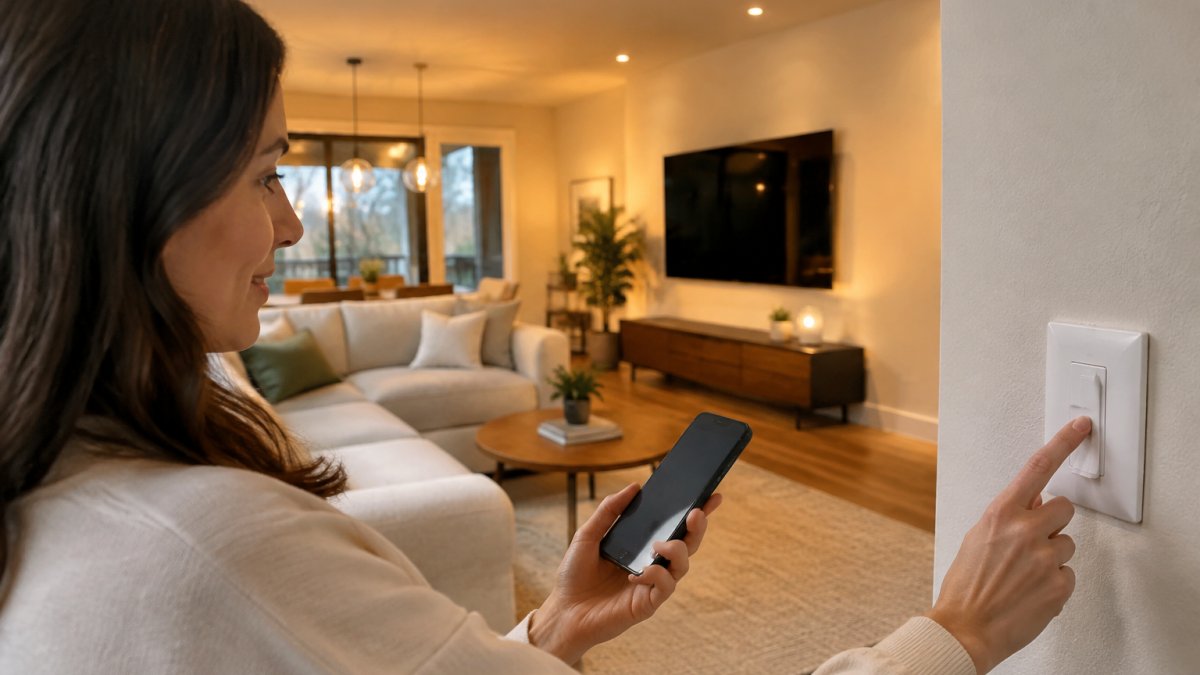
The core benefit is control. A smart system can be run from an app, a voice assistant, a wall-mounted touch panel, or a motion sensor, and many systems allow all four at once.
Smart Home Energy Efficiency: How Much You Can Save
Smart lighting saves energy through three separate mechanisms, and understanding which one is doing the work in your home is what separates a real savings estimate from a marketing claim.
1. Lower wattage per fixture. The foundation is the bulb itself. The U.S.
2. Elimination of wasted run time. Scheduling, occupancy sensing and daylight harvesting cut the hours a light is actually on. This is where the savings vary most from home to home.
**3.
How to estimate your own savings
You do not need a contractor to get a rough number. Multiply a fixture's wattage by the hours per day it runs, divide by 1,000 to get kilowatt-hours, then multiply by your electricity rate. Do that for the fixtures you plan to automate, then re-run the math with the reduced hours and lower wattage you expect.
Watch out: savings claims that assume every light in the house is left on all day will not hold in a home that is already disciplined about switching off, so compare the estimate against your last few utility bills before you commit to a whole-home retrofit.
The hardware longevity angle most guides skip
Energy savings are only half the financial story. Smart bulbs and smart switches have very different lifespans, and that difference changes the payback math:
- Smart bulbs carry the radio and the intelligence inside the lamp, so when the LED array eventually fades or the module fails, you replace the whole unit, at smart-bulb prices, not standard-bulb prices. Bulbs in high-use fixtures (kitchen, living room, hallway) will wear out first.
- Smart switches and dimmers put the intelligence in the wall and let you use ordinary, inexpensive LED bulbs behind them. When a bulb dies you replace a cheap bulb; the smart hardware stays. For whole-room or whole-home installs, this usually produces a lower lifetime cost even though the upfront hardware is pricier.
- Hubs and bridges are the wildcard. A hub that stops receiving firmware updates can strand the devices that depend on it, which is the software-obsolescence risk that no energy-savings calculator accounts for.
A practical rule: use smart bulbs where you want color or where wiring is impractical (lamps, rentals, accent fixtures), and smart switches where the goal is efficiency and long-term value across many fixtures on one circuit.
The article breaks down the three ways smart lighting saves energy, which are summarised below.
| Savings source | How it works | Typical gain |
|---|---|---|
| Lower wattage per fixture | LEDs produce more light per watt than incandescent bulbs | Savings start before automation |
| Less wasted run time | Scheduling, occupancy sensing and daylight harvesting cut hours on | Varies most from home to home |
| Dimming and scene control | Lower output cuts power draw; layered low-output lamps | Improves comfort and consumption |
Comfort, Circadian Rhythm and Mood Lighting
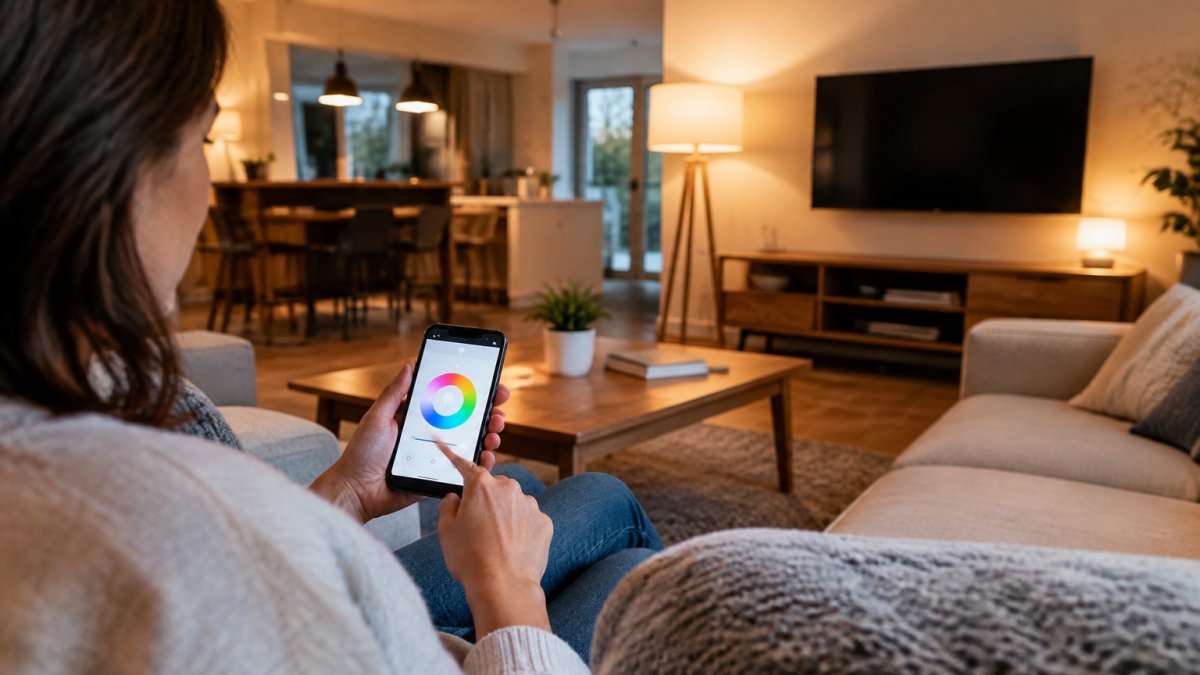
Smart lighting can adjust color temperature and brightness through the day. Cooler, brighter light in the morning and warmer, dimmer light in the evening is a common setup intended to support a more regular sleep routine, and many systems include preset schedules for exactly this purpose.
Mood lighting is the more immediate benefit for most households. Adjustable color and scene presets let you set the room for dinner, a movie or a late-night reading session without rummaging for lamps. A common mistake is buying color-changing bulbs for every fixture and then never using the colors.
Security, Presence Simulation and Accessibility Benefits
Presence simulation is one of the more practical security features. Lights that follow a varied schedule while you are away make a home look occupied, which is more convincing than identical timers that switch on at the same minute every night.
Accessibility is an overlooked benefit. For older adults or people with limited mobility, voice control and motion-triggered lighting reduce the need to reach for switches or walk through dark rooms. Smart lighting can also make a home easier to manage for people who have difficulty with small controls. Choose systems with large, simple controls and voice options where these needs apply.
Smart Lighting Installation Cost and Value
Smart lighting costs are generally driven by several variables, which can help you sanity-check any quote before you sign:
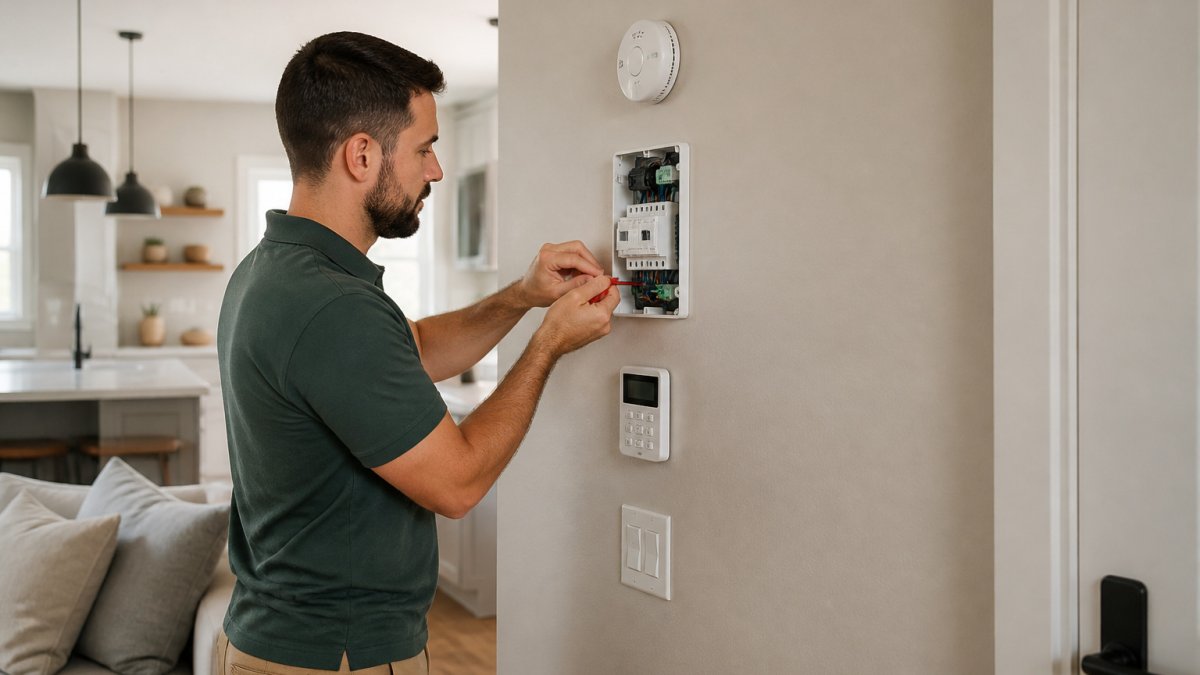
- Bulbs vs. switches vs. a full platform. Smart bulbs are the lowest entry point because there is no wiring work, you screw them in. Smart switches generally require an electrician to open the wall, confirm a neutral wire is present, and install the device. A hub-based whole-home platform adds hardware and setup time on top.
- Fixture count and circuit layout. Cost scales with the number of devices and, more importantly, with how many separate circuits and switch legs are involved. A single room with one switch is a small job; a whole floor with three-way switches and dimmers is a different scope.
- Wiring condition. Older homes may lack a neutral wire at the switch box, which smart switches generally require. Remedying that is real electrical work.
- Hub, bridge and subscription costs. Some ecosystems require a bridge or hub, and a few features (remote access, advanced automations, camera or sensor integration) sit behind a subscription. Ask specifically which features work without a paid plan.
Because scope varies this much, we do not publish a single typical figure, a quote that fits one home would mislead another. Contact T6 Electrical Contractor for pricing based on your actual fixture count and wiring.
The value question, framed honestly
Compare the upfront cost against the benefits you will actually use: convenience, energy savings, presence simulation and accessibility. A small install in one or two rooms is a different decision from a whole-home retrofit, and the payback on a whole-home job depends heavily on whether you choose smart switches (lower lifetime bulb cost) or smart bulbs everywhere (higher replacement cost over time).
The gap most guides ignore: troubleshooting and connectivity
Every smart lighting guide promises reliability; few explain what happens when it fails. Before you buy, understand the three failure modes that generate the most support calls:
- Wi-Fi congestion. Dozens of Wi-Fi bulbs on a single router can strain the network, especially in larger homes. A hub using a low-power mesh protocol (Zigbee or Thread) often proves more stable for large installs than direct Wi-Fi bulbs.
- Neutral-wire and dimmer compatibility. Smart dimmers can buzz, flicker or fail to dim smoothly with incompatible LED drivers. Check the dimmer's published compatibility list against your bulbs before installation.
- App, hub and firmware drift. A device that works today can stop responding after a router change, a firmware update or a hub replacement. Keep a record of which devices are on which protocol so a future troubleshooting session starts from a known map.
Watch out: a system that depends on a cloud service can lose remote control or scheduling if the manufacturer changes its terms or discontinues the product, confirm whether core functions run locally before you build routines around them.
Privacy and data security
Connected lighting means connected data. A smart bulb or hub can log on/off times, occupancy patterns and room usage, and that data may travel to a manufacturer's cloud. Practical steps: prefer systems that support local control, use a separate guest network for smart devices where your router allows it, enable two-factor authentication on the account, and review what the app actually collects. This is the angle most buying guides skip, and it matters more as lighting becomes part of a broader home network.
Pros and Cons of Smart Lighting Systems
Smart lighting has clear advantages and real drawbacks, and both should inform the decision.
- Pros: Remote and scheduled control, potential energy savings, presence simulation, voice and accessibility options, and automation with other devices.
- Cons: Higher upfront cost than standard fixtures, dependence on Wi-Fi or a hub, possible compatibility problems between brands, and the risk that a system becomes outdated as standards change.
Compatibility is the issue homeowners raise most often. Before buying, confirm that your bulbs, switches, hub and voice assistant support the same wireless protocol or ecosystem.
Best Smart Lighting System for Home Use
There is no single best smart lighting system for every home. The right choice depends on whether you want smart bulbs, smart switches or a whole-home platform, and on which voice assistant and devices you already use. Smart bulbs are the simplest to add but are limited to the fixtures they fit. Smart switches control every bulb on a circuit and suit whole-room or whole-house installs. Hubs and platforms add reliability and cross-brand integration at the cost of more setup.
Use the Matter smart home standard overview as a reference when checking whether devices from different manufacturers will work together, since it is designed to improve cross-brand compatibility.
Booking a Smart Lighting Consultation With T6 Electrical Contractor
If you are weighing these options for your own home, a consultation is the fastest way to get a plan that fits your wiring, budget and goals. T6 Electrical Contractor offers personalized consultations to help you choose the right electrical scope for your needs and budget. Our team specializes in smart home automation and works on both residential and commercial projects across the DFW area.
Contact T6 Electrical Contractor to schedule a consultation and get a clear picture of what your home needs.
Frequently Asked Questions
Do smart lights raise your electric bill?
Smart lights themselves draw very little power, usually a fraction of a watt in standby. The bigger effect on your bill comes from how the lights are used. Scheduling, motion sensing and automatic dimming turn off lights in empty rooms and reduce brightness when full output is not needed. Most households using LED bulbs with automation see lower lighting energy use than with older incandescent or halogen fixtures. Your actual savings depend on your fixtures, habits and local electricity rates, so a quick audit of your current lighting load is the best way to estimate them.
What are the main disadvantages of smart light switches?
Smart light switches cost more than standard switches and often require a neutral wire at the switch box, which older homes may not have. Some models depend on a hub or cloud service, so a connectivity or app outage can affect control. Compatibility with certain bulbs is another concern, particularly with dimmable LEDs that do not match the switch. Working with a licensed electrician to check wiring and select compatible devices before purchase avoids most of these problems.
Is smart lighting worth it for a typical home?
Smart lighting is worth it when you value convenience, energy savings, security features or accessibility for elderly or disabled household members. The return is not always financial. Homes with many fixtures, frequently used rooms or existing smart home devices typically get the most value. Ask for a written quote that breaks down hardware, labor and any wiring work so you can compare the cost against the benefits you expect.
Can smart lighting improve home security?
Smart lighting can improve security through presence simulation, which turns lights on and off on a schedule or in response to sensors to make the home look occupied when you are away. Motion-triggered exterior lighting can also deter intruders and help you see who is at the door. These features work best when combined with locks and cameras that report to the same app. Set schedules that vary slightly from day to day so the pattern does not look automated to an observer.