 how-to
Hiring an Electrician for Home Renovation: A Complete Guide
Table of Contents
- Why Hiring the Right Electrician Matters for Your Renovation
- How to Choose an Electrical Contractor for Your Project
- Questions to Ask an Electrician Before Hiring
- Understanding Electrician Renovation Cost and Estimates
- Electrical Renovation Timeline: What to Expect
- Common Electrical Work in Home Renovations
- Red Flags and Quality Checks During Your Project
- Frequently Asked Questions
Last Updated: October 12, 2026
Why Hiring the Right Electrician Matters for Your Renovation
Electrical work is not a place to cut corners. A poorly executed renovation can leave you with flickering lights, tripped breakers, safety hazards, or code violations that tank your resale value.
At T6 Electrical Contractor, we are dedicated to delivering reliable solutions and exceptional customer satisfaction.
Your electrical system powers everything in your home and poses real safety risks if mishandled.
This guide covers what to look for, questions to ask, licensing and insurance, comparing estimates, typical costs, and red flags that should make you walk away.
How to Choose an Electrical Contractor for Your Project
Choosing the right electrical contractor starts with three non-negotiable filters: licensing, insurance, and a solid local track record.

Licensing, Insurance, and Permits
An electrician without a license is doing electrical work illegally. Most states require electricians to be licensed and carry liability insurance.
Insurance is equally critical. A licensed electrician should carry general liability and workers' compensation insurance, so you're covered if they're injured on your property or damage your home.
Permits are where many homeowners get burned. Some contractors quote a lower price if you "skip the permit", don't.
Local Track Record and References
Ask for references from recent renovation projects and call them. Ask: Did the work start and finish on time? Did the contractor communicate clearly? How were issues handled?
Online reviews matter, but read them for patterns, not isolated complaints.
A contractor with years in your area and steady work has a reputation to protect. New contractors can be excellent, but established ones have a longer track record to evaluate.
Questions to Ask an Electrician Before Hiring
Before you commit, schedule a consultation. A good electrical contractor will spend time understanding your project scope, not just quoting a price over the phone.
Scope and Experience
Ask directly: "How many renovation projects have you completed in the past two years?" Renovation work differs from repairs, it requires planning, coordination with other trades, and often rewiring or panel upgrades.
Ask about their experience with your project type, panel upgrades, kitchen electrical work, smart switches, outlets, or EV charging stations. A contractor who's done the work before understands the pitfalls and timelines.
Ask how they coordinate with other trades. Electricians work alongside plumbers, HVAC contractors, and carpenters, and poor coordination causes delays and rework. A contractor with systems for this will say so.
Timeline and Availability
Ask how long your project will take and when they can start. Clarify what "start" means, site visit and planning, or actual work? What's their typical lead time?
Ask about schedule reliability. Do they commit to specific days or work on a "we'll call you when we're in your neighborhood" basis? Renovation work needs predictability because other trades depend on the electrical work finishing on schedule.
Understanding Electrician Renovation Cost and Estimates
Electrical renovation costs vary wildly. A single outlet addition costs far less than rewiring a 1970s home or upgrading a 100-amp panel to 200 amps. Understanding the cost drivers helps you judge whether an estimate is reasonable and spot line items a low bidder left out.
The Six Cost Drivers That Move the Number
Almost every estimate traces back to six variables. Ask your contractor to walk through each one:
- Scope of new work. One dedicated 20-amp circuit for a microwave is a few hours; twelve circuits for a kitchen remodel is a multi-day job with a permit and inspection.
- Access and wall condition. Running wire through an open wall is fast; through finished plaster it means cutting, fishing, and patching. Access difficulty, not wire cost, is often the biggest swing factor in a rewiring estimate.
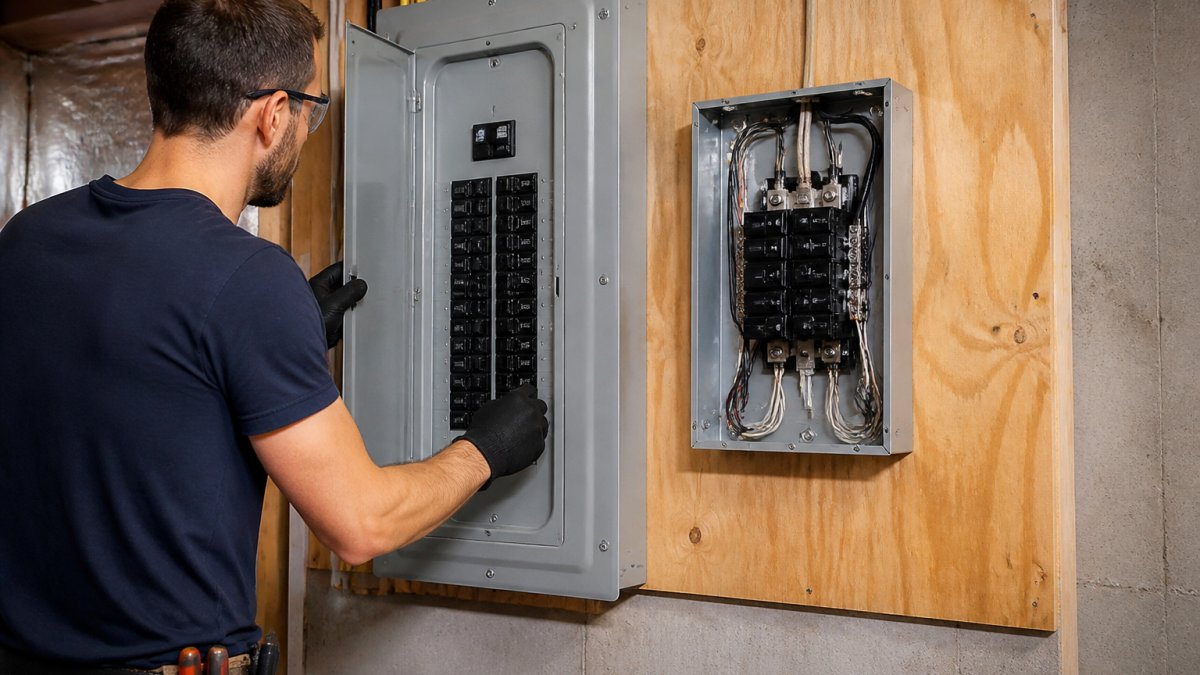
- Panel capacity. Open breaker slots and adequate amperage make adding circuits straightforward. A full, undersized, or discontinued panel may require a service upgrade before new work can be permitted.
- Concealed conditions. Knob-and-tube wiring, aluminum branch circuits, cloth-wrapped insulation, or unpermitted DIY work are discovered after walls open. A good estimate includes an allowance for concealed conditions and a written change-order process.
- Fixtures and devices. Labor to install a recessed can is roughly the same whether the fixture costs $15 or $150, but fixtures, smart switches, dimmers, and occupancy sensors add up. Decide who supplies fixtures and confirm it in the contract.
- Permits and inspections. Permit fees are set by your local building department, are not negotiable, and are not optional. A bid that excludes permits is an incomplete bid.
How to Compare Written Estimates Line by Line
Get at least two, ideally three, written estimates, then compare these points, not the bottom-line number:
- Labor vs. materials. A good estimate separates them; a lump sum tells you nothing about changes mid-job.
- Permit responsibility. The contract should state in writing that the contractor will pull the permit and schedule the inspection.
- Wire and device specifications. Look for wire gauge (12-gauge for 20-amp circuits, 14-gauge for 15-amp), breaker brand, and spec-grade vs. builder-grade devices.
Why "Cheapest" Usually Isn't
A lower estimate that excludes permits, concealed-condition work, or fixture installation is not a better deal, it's a smaller scope. When walls open and the contractor finds aluminum branch wiring, the change order arrives and the final invoice lands close to or above the bids you rejected. Homeowners who come out ahead compare scope, not price.
Electrical Renovation Timeline: What to Expect
Most renovation electrical work takes days to weeks. A single outlet addition might take a few hours; rewiring a house or upgrading a panel typically takes several days to a week or more. The more useful question is when the electrician needs to be on site and what has to happen before and after, that sequencing keeps a renovation on schedule.
The Four Electrical Phases of a Renovation
A renovation electrician typically touches your project in four phases. Knowing them lets you build a realistic schedule and hold your GC and electrician to it.
- Pre-construction walkthrough and rough plan. Before demolition, the electrician walks the space with you and the GC, confirms panel capacity, and flags obvious problems (undersized service, obsolete panel brand, visible knob-and-tube). Finalize the lighting plan, outlet locations, and dedicated circuits for appliances or EV charging here.
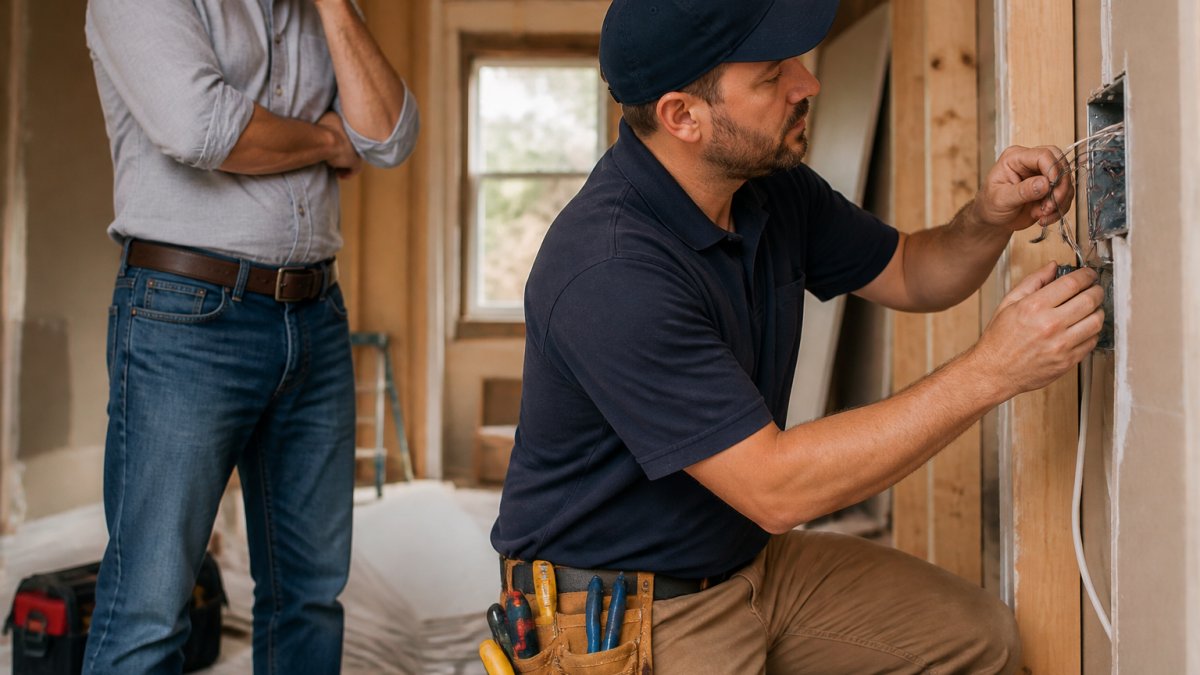
- Rough-in. After framing and before drywall, the electrician runs wire, installs boxes, and mounts rough-in hardware. This is the most schedule-critical phase, if rough-in slips, drywall and every trade behind it slips too.
- Rough-in inspection. Most jurisdictions require inspection before walls are closed. The electrician schedules it, and any issue must be corrected before drywall, exactly why you don't skip the permit.
- Trim-out. After drywall, paint, and flooring, the electrician installs devices, fixtures, cover plates, and panel trim. A final inspection follows.
Coordinating with Other Trades
In a full renovation, electrical work must coordinate with framing, plumbing, HVAC, insulation, and drywall. The rough-in window is narrow: framing done, drywall not started. Plumbing and HVAC rough-ins often share that window, so trades must be sequenced, not stacked.
A contractor who understands this communicates directly with your GC or project manager and commits to specific days, not a "we'll call you when we're in the neighborhood" schedule.
What Delays Electrical Work
The most common electrical delays are predictable:
- Late fixture selections. The electrician can't rough-in recessed lighting without knowing fixture type and layout. Lock the lighting plan before rough-in.
- Panel capacity surprises. If the panel can't support the new load, a service upgrade must be permitted and scheduled, adding weeks.
- Concealed conditions. Finding knob-and-tube or aluminum wiring mid-rough-in triggers a change order and often a re-inspection.
- Inspection scheduling. In busy jurisdictions, an inspector may take several business days. Build that in.
A Realistic Sequencing Snapshot
For a typical kitchen or bathroom renovation: pre-construction walkthrough, rough-in after framing and before drywall, rough-in inspection, a pause for drywall, paint, and finishes, then trim-out, then final inspection. The electrician's on-site hours may be small relative to calendar time because the work is gated by other trades. Plan around the gates, not the hours.
Common Electrical Work in Home Renovations
Understanding what electrical work typically involves helps you ask better questions and evaluate estimates more critically.
Rewiring and Panel Upgrades
Older homes often need rewiring for modern loads. Appliances, HVAC systems, and electronics draw far more power than 30 years ago. If your panel is undersized or wiring outdated, upgrades are safety requirements, not options.
Rewiring means running new wire from the panel through walls to outlets, switches, and fixtures. With finished walls, that means opening walls, running wire, and patching afterward.
Kitchen and Bathroom Electrical Updates
Kitchens and bathrooms have specific code requirements. Kitchens need GFCI protection on countertop outlets and sufficient appliance circuits; bathrooms need GFCI outlets and proper ventilation fan wiring. Renovation is the ideal time to add dedicated circuits, install new outlets, and meet current code.
Lighting Installation and Smart Home Integration
Modern lighting often includes recessed fixtures, under-cabinet lighting, and task lighting, far easier to install during renovation than to retrofit. Smart home integration (dimmers, occupancy sensors, smart switches, automated scenes) requires planning during design.
An EV charger needs a dedicated circuit with its own breaker and possibly a panel upgrade if capacity is limited. Plan it upfront to avoid costly changes later.
Red Flags and Quality Checks During Your Project
A contractor who doesn't pull permits or downplays their importance is cutting corners.
Poor communication, missed appointments, no updates, ignored calls, signals deeper problems.
A contractor who won't provide a written estimate or contract operates without accountability.
If a change order comes in dramatically higher than the original estimate, ask questions.
Hiring electrician for home renovation affects your home's safety, functionality, and value.
At T6 Electrical Contractor, we treat every renovation as a chance to build a safe, efficient electrical system ready for modern demands. We specialize in comprehensive electrical installations, repairs, and innovative smart home automation, with personalized consultations tailored to your needs and budget.
Frequently Asked Questions
What should I ask an electrician before hiring them for a renovation?
Ask about their licensing and insurance, experience with projects similar to yours, timeline and availability, how they handle permits and inspections, and whether they provide a written estimate with detailed scope. Request references from recent renovation projects and clarify their response time for questions or issues during the work. A professional electrician will answer these thoroughly and provide documentation upfront.
How long does electrical work typically take during a home renovation?
Most electrical renovation work takes 1-4 weeks depending on scope. Simple updates like outlet and switch installation may take days, while rewiring an older home or panel upgrades can take 2-3 weeks. Coordination with other trades affects timing, electrical rough-in happens before drywall, and final inspections occur near project completion. Your electrician should provide a detailed timeline during the estimate phase.
How do I know if an electrician's renovation cost estimate is reasonable?
Get at least two written estimates that break down labor, materials, and permits separately. Compare the scope of work, not just the total price. Higher costs often reflect more experience, quality equipment, or additional services like design consultation. Be cautious of estimates significantly lower than others, they may indicate shortcuts or missing scope. Ask what's included and what costs extra before committing.
What's the difference between hiring a local electrician versus a larger contractor for my renovation?
Local electricians often provide personalized attention, faster response times, and flexibility with scheduling. Larger contractors may have more resources and standardized processes but can be less adaptable. For renovations, a local professional with renovation experience and strong references often delivers better results than brand recognition alone. Verify licensing, insurance, and past project quality regardless of company size.